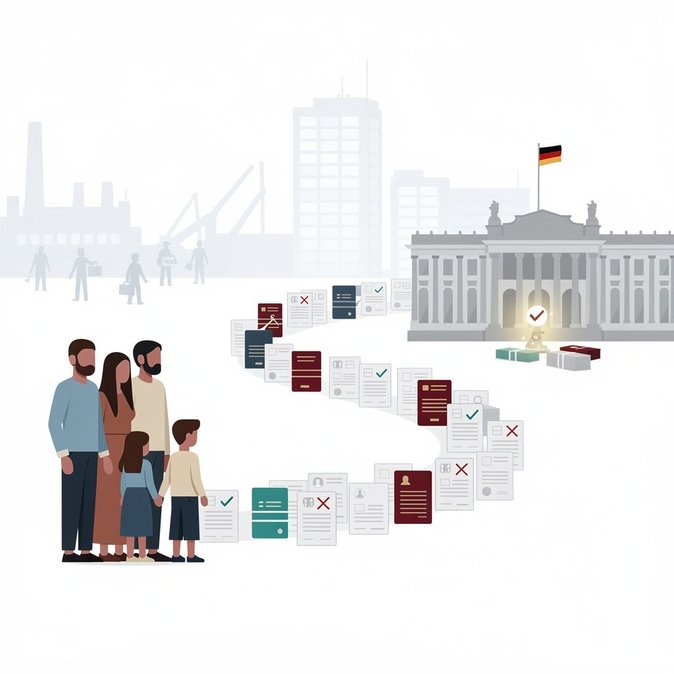
A data analysis published by parliamentary watchdog site Drucksachlich on 22 November reveals that Germany has issued a mere 31 visas under the ‘§22 hardship’ exemption for family reunion since the regular track for subsidiary protection holders was suspended in July 2025. The figure is buried in a 37-point query submitted by Die Linke MPs (BT-Drs. 21/9263) and stands in stark contrast to roughly 5,500 hardship applications and 380,000 names on decentralised waiting lists. Critics say the numbers confirm that the exemption is “largely illusory”, ignoring European Court of Human Rights guidance that family separation beyond three years breaches Article 8 ECHR. For mobility and HR teams the backlog has practical consequences: many refugees working in Germany under subsidiary protection cannot bring spouses or children, increasing stress and turnover risk. Companies may need to budget for additional home-leave travel or counselling support until the suspension expires in July 2027. Legal advisers note that courts have limited power to compel visa issuance while identity verification remains pending at consulates with multi-year appointment delays. The Linke inquiry presses the government to clarify whether the 1,000-visas-per-month cap will be fully utilised once normal processing resumes.
Source: Drucksachlich