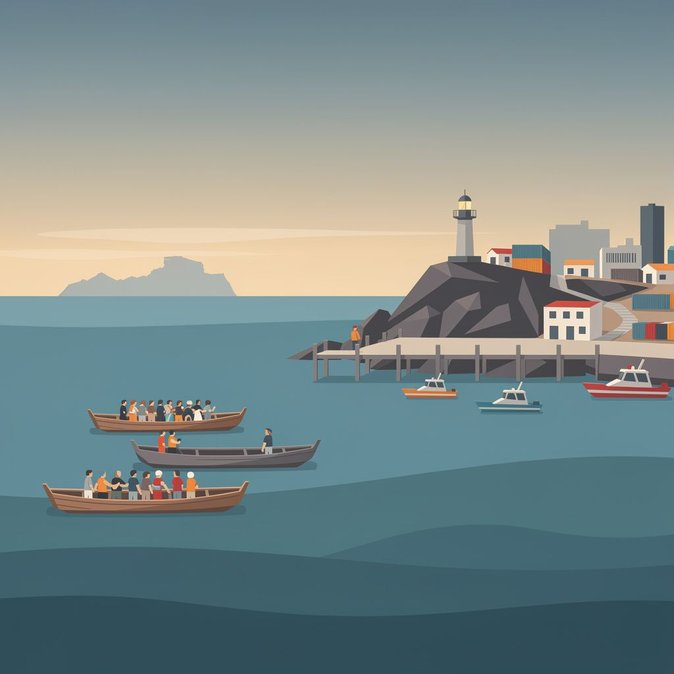
After a rare week-long lull, Spain’s Atlantic migration corridor roared back to life in the early hours of Sunday, 22 November. Between midnight and mid-afternoon Salvamento Marítimo and the Guardia Civil escorted five wooden cayucos to the tiny port of La Restinga on El Hierro. The boats carried 297 people, including at least seven women and seven minors, all believed to have departed the Senegalese coast five days earlier. Their safe arrival ends a brief respite that followed the record weekend of 14–15 November, when 3,684 people were rescued in just 48 hours. The fresh landings are once again thrusting irregular migration into the centre of Spain’s 29 November general-election campaign. Opposition leader Alberto Núñez Feijóo flew to the island on Friday to promise tougher border measures and penalties for smugglers, while Prime Minister Pedro Sánchez spent Saturday in Tenerife and Gran Canaria defending a humanitarian approach and highlighting migrants’ contribution to the archipelago’s economy. Both leaders are wooing Canarian voters who have seen more than 11,000 arrivals in the first half of November alone. Rescue unions used the lull to demand extra manpower and an additional rescue launch. Although Madrid sent one new Salvamar vessel on 10 November and reinforced police numbers, CGT delegates say crews still work "at the limit" and urgent relief rosters are needed before the Christmas peak. Local authorities add that reception centres on El Hierro—whose resident population is only 12,000—remain stretched despite the evacuation of several hundred people to Tenerife last week. For employers with staff based in the Canaries, the renewed flow could again strain accommodation, medical and security resources. Travel managers should anticipate occasional port closures or ferry diversions while rescue operations are under way, and assignees should carry passports at all times; ad-hoc identity checks have increased on inter-island flights. Longer term, any incoming government is likely to adapt Spain’s migration and labour-market policies in response to the islands’ experience, potentially tightening sponsorship rules for low-skilled workers while expanding pathways for sectors facing shortages. Companies using the Canaries as a logistical hub should therefore keep close watch on legislative developments in December and plan for possible compliance audits concerning posted workers and subcontractors involved in humanitarian logistics.
Source: El País