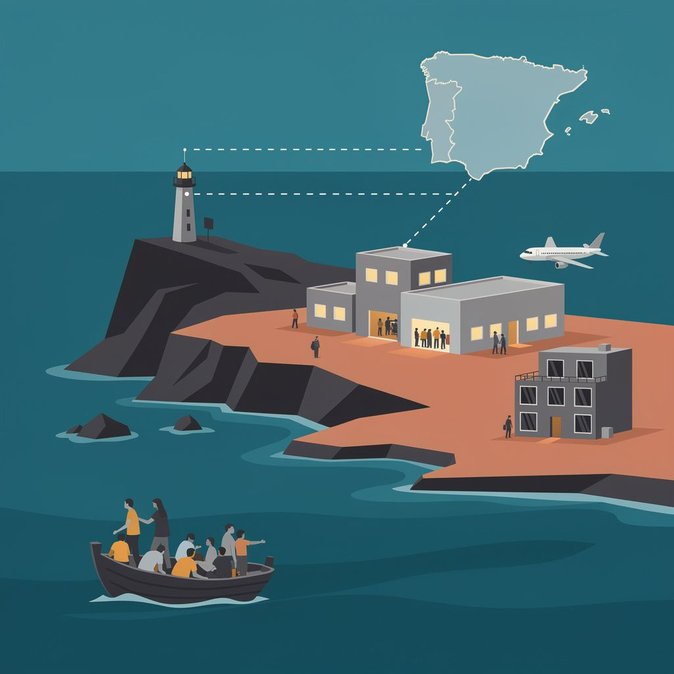
A wooden cayuco carrying 67 migrants – among them five women and four minors – docked safely in the harbour of La Restinga, El Hierro, at 09:40 on Saturday, 21 November. It was the first boat to reach the smallest Canary Island since Monday, yet it underscores a surge that has seen more than 11,000 people arrive in the archipelago during the first half of November alone, according to Interior-Ministry data. State sea-rescue agency Salvamento Marítimo escorted the vessel to port after coastal radar picked it up at dawn. The group was transferred to the island’s temporary reception facility (CATE) for health checks and identification. Earlier this month the island council declared a “social emergency”, citing stretched medical, transport and accommodation resources for a local population of barely 11,400. While Saturday’s arrival was modest compared with the record weekend of 14-15 November, when over 2,700 migrants reached the Canaries, it prolongs operational strain on Spain’s asylum system just eight days before the 29 November general election. The conservative Partido Popular has already seized on the influx to criticise the Sánchez government’s migration management and to demand more Frontex assets in Atlantic waters. For employers running projects in the Canaries the humanitarian situation also has practical knock-ons: ferry and inter-island flight capacity is periodically requisitioned to transfer arrivals to reception centres on Gran Canaria and Tenerife, causing commercial schedule changes at short notice. NGOs report hotel block bookings for emergency accommodation, which can squeeze corporate travel budgets during the high-season winter sun period. Madrid is expected to release updated arrival statistics for the second half of November in early December. Meanwhile, companies with staff stationed on El Hierro are advised to monitor local transport bulletins and to confirm hotel allocations well in advance, as authorities prioritise vulnerable arrivals for available rooms.
Source: CITA News