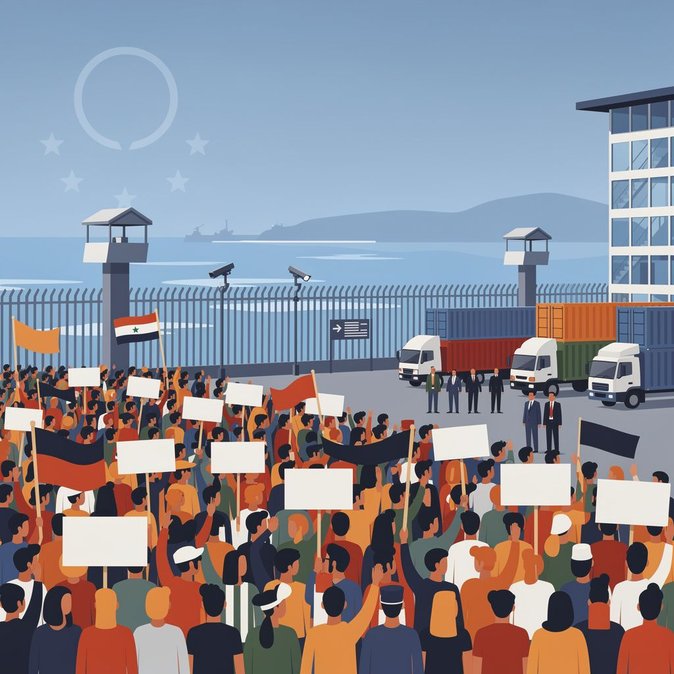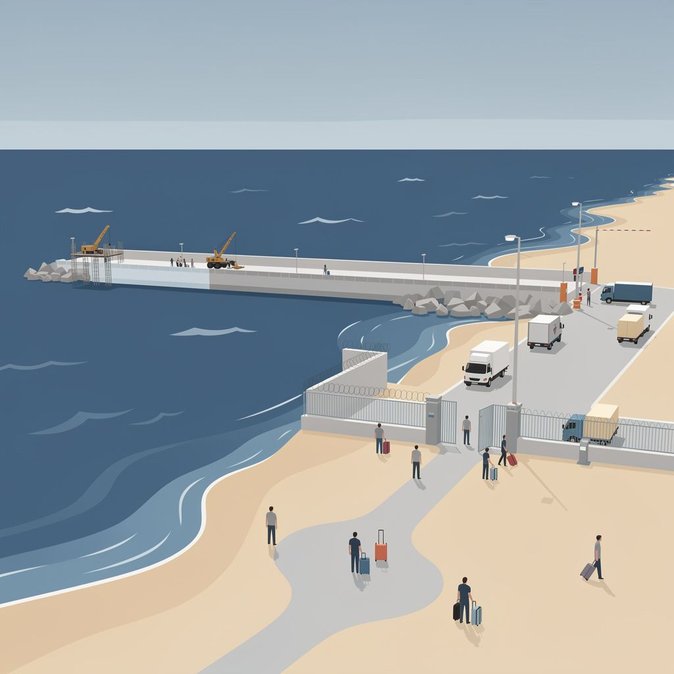
Civil-engineering crews began driving the first piles for a 15-metre seaward extension of Ceuta’s Tarajal breakwater on Sunday after a supply barge arrived from Algeciras with prefabricated concrete modules. The work marks phase one of a two-stage, €7 million project that will ultimately stretch the barrier a further 165 metres and top it with anti-climb mesh and curved spikes. The Ministry of the Interior says the upgrade is designed to deter mass sea entries like the 30–31 July incident, when thousands of people swam or waded into the Spanish enclave from neighbouring Morocco. Delegado del Gobierno David de la Encina inspected the site and hailed the construction as “a structural answer to a structural challenge.” A second phase will replicate the design at the Benzú breakwater on Ceuta’s north coast once environmental clearances are secured. The project complements ongoing EU-funded upgrades to smart-sensor fences and a new command-and-control centre scheduled to go live in early 2027. Human-rights groups, including the Asociación Pro Derechos Humanos de Andalucía, criticised the extension, warning that higher and longer obstacles merely push migrants towards longer, deadlier maritime routes. The ministry counters that the works include underwater shelves to prevent drownings and that additional legal migration channels—such as seasonal agricultural visas—are being negotiated with Rabat. For cross-border traders the construction period will mean sporadic closures of the Tarajal vehicle gate and stricter ID checks at the pedestrian lane. Logistics firms moving just-in-time goods between Andalusia and northern Morocco should factor in potential delays of up to two hours during crane operations. Multinationals with staff commuting daily through Tarajal are advised to enrol employees in the FAST lane pilot that Ceuta will test in December using biometric gates. Once complete in mid-2027, the fortified breakwater is expected to reduce small-boat launches from the nearby Moroccan beach of Fnideq, but could also shift pressure to other stretches of the frontier or to the Canary Islands route—an externality companies should monitor when planning supply-chain or mobility strategies that rely on the Strait of Gibraltar corridor.
Source: AS.com