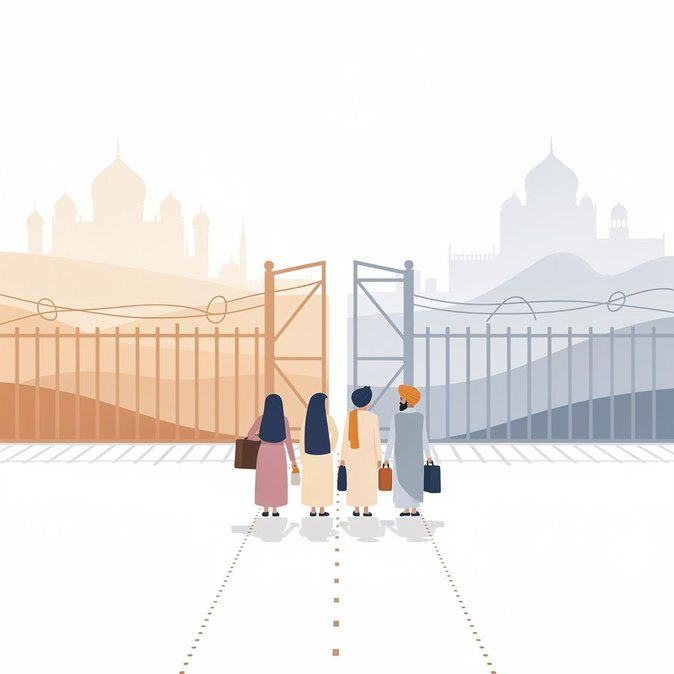
Around 700 Sikh pilgrims walked across the Attari-Wagah land border on 22 November after receiving special short-term pilgrimage visas from the Pakistani High Commission. Another 2,300 devotees are expected to follow over the next two days to celebrate the 557th birthday of Guru Nanak Dev at Nankana Sahib and other gurdwaras in Punjab Province. The movement takes place under the 1974 India-Pakistan Protocol on Visits to Religious Shrines, which survives even when regular tourist and business visas between the neighbours remain largely frozen. Groups are escorted through dedicated corridors on both sides, their passports stamped manually rather than scanned through the standard immigration counters. Indian security agencies maintain an escort inside the Integrated Check-Post, while Pakistan Rangers take charge beyond the Zero Line. Officials from the Ministry of Home Affairs said Delhi had cleared the passenger manifests only after verifying that each traveller returned from a previous yatra and had no pending criminal cases. Pakistan in turn guaranteed medical facilities, police protection and accommodation near the shrines. Diplomatic observers see the exercise as a rare, functional confidence-building measure amid an otherwise stagnant bilateral relationship. For mobility managers the episode is a reminder that highly specific visa channels—religious, medical, sporting—can reopen even when mainstream categories stay shut. Companies moving staff between India and Pakistan should therefore keep protocol-based exemptions on their radar and budget extra time for bilateral security vetting.
Source: The Economic Times