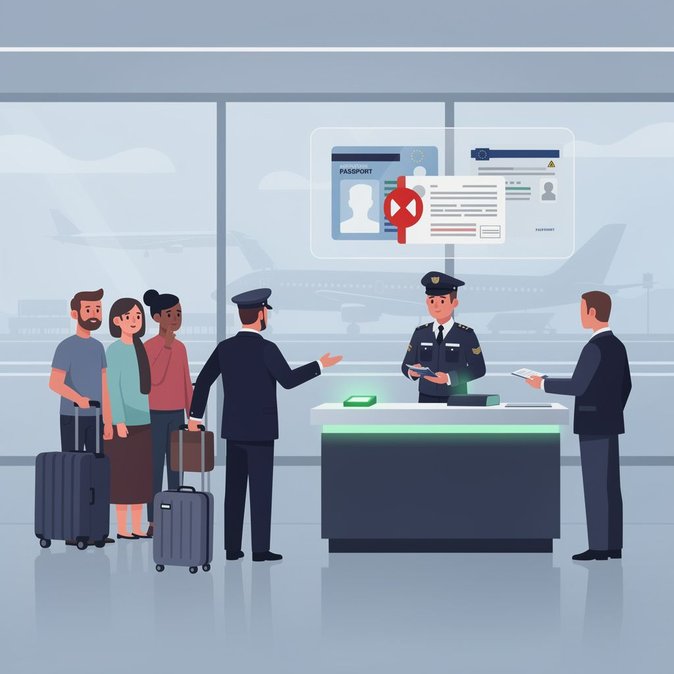
The Nadwiślański Division of Poland’s Border Guard reported that officers at Warsaw-Chopin Airport denied entry to 15 foreign nationals over the weekend of 22-23 November. Among them were citizens of Georgia, Russia, Ukraine, Iran, Albania and Israel who failed to show proof of purpose of stay or adequate funds. Most striking was the interception of three Syrian passengers arriving from Vietnam who attempted to enter using forged Swiss residence permits; criminal proceedings have been opened for document fraud. The Syrians have since expressed an intention to seek international protection in Poland and will likely be transferred to a secure foreigners’ centre pending asylum interviews. The remaining travellers were placed on the next available outbound flights or, where visa-free overstays were involved, issued decisions obliging them to leave the Schengen Area within defined deadlines. Year-to-date, Chopin Airport officers have issued more than 1,000 refusals of entry—double the 2025 figure—reflecting both higher passenger volumes post-pandemic and enhanced scrutiny of travel documents after several high-profile trafficking cases. The Border Guard has deployed new UV scanners and a joint INTERPOL alert platform at major airports, enabling real-time checks against lost or stolen document databases. For global mobility teams relocating staff to Poland, the incident underscores the importance of document hygiene. Travellers must carry original, unaltered residence cards, employment invitations or proof of accommodation as required under Article 25 of the Schengen Borders Code. Employers should brief assignees that digital copies on phones are not accepted and that officers may verify the authenticity of entry visas via the EU’s Visa Information System on the spot. Failure to clear border formalities can lead to immediate removal, entry bans of up to five years and reputational damage for sponsoring companies. Pre-departure audits and the use of accredited visa agents remain the best defence against last-minute surprises at Polish ports of entry.