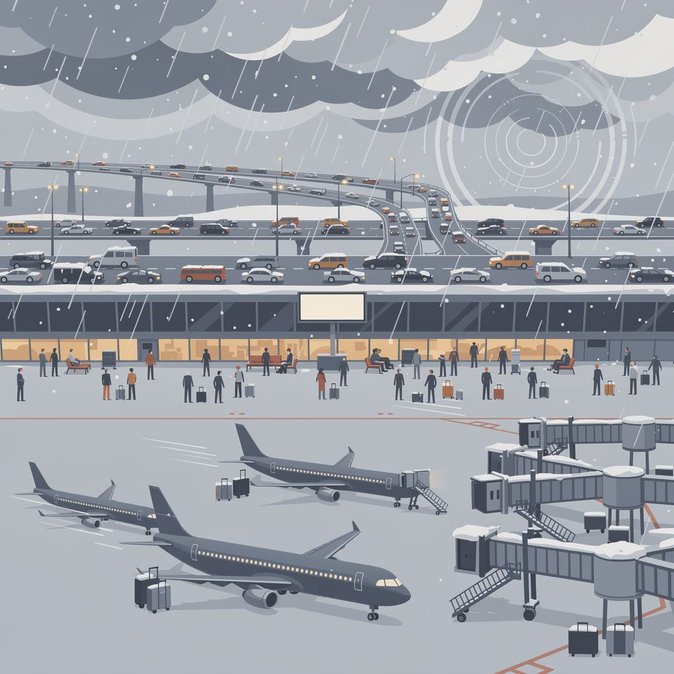
Just days after a rare nationwide air-traffic ground stop and two separate airline IT outages, meteorologists are tracking a band of heavy rain and early-season snow that could sweep the Midwest and Northeast on the peak departure days of Tuesday and Wednesday. The Federal Aviation Administration has already issued flow-control plans for Chicago O’Hare, Atlanta Hartsfield-Jackson and all three New York City airports. According to AAA, 81.5 million Americans—about one in four residents—plan to travel 50 miles or more over the long weekend, with 5.2 million expected to fly. Airlines say they are staffing extra reserve crews after last week’s software glitch grounded more than 4,000 flights in a single morning. TSA, meanwhile, projects screening volumes of up to 2.9 million passengers per day, approaching pre-pandemic holiday records. For corporate travel managers, the confluence of weather threats and fragile tech infrastructure poses significant duty-of-care challenges. Companies with in-person client meetings scheduled for Monday 30 November should prepare contingency plans, including remote participation options and refundable tickets. Travelers enrolled in TSA PreCheck and CLEAR are urged to arrive at least three hours before departure; those holding Global Entry should confirm Enrollment-on-Arrival staffing, as some airports reassign CBP officers to holiday passenger flows. Ground transportation isn’t immune. INRIX forecasts congestion peaks of 130% above normal on urban corridors such as I-95 outside Washington, D.C. Rail operator Amtrak has added 14 extra trains on the Northeast Corridor but warns of "unplanned service adjustments" if wind gusts top 60 mph. Business-mobility teams should monitor carrier waivers—United, Delta and American have already posted change-fee exemptions for 65 airports—and remind employees that many corporate travel policies exclude reimbursement for hotels booked outside preferred channels during irregular operations.
Source: Associated Press