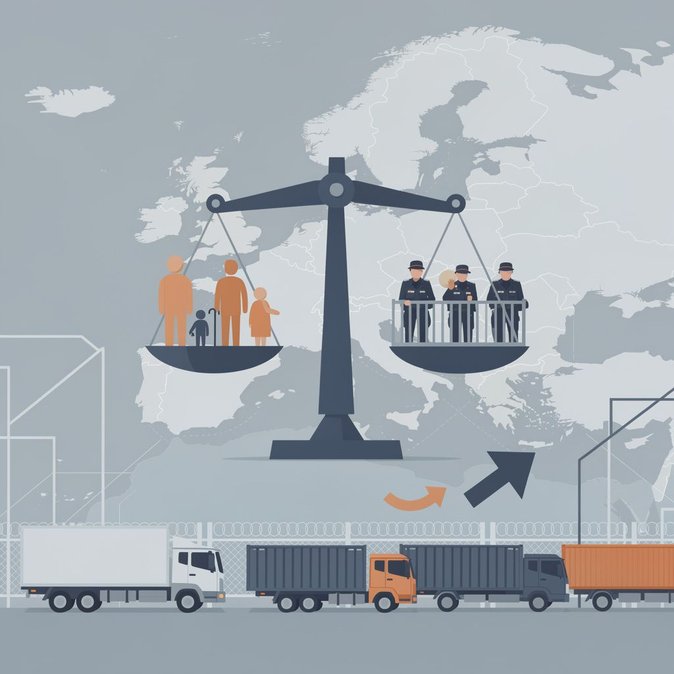
In a landmark judgment handed down on 24 November, the European Court of Human Rights (ECHR) ruled that states may refuse entry and return irregular migrants when an ‘enemy’ state is proven to be deliberately instrumentalising migration flows. The Court examined three test cases involving Lithuania, Latvia and Poland, which had pushed Afghan, Iraqi, Syrian and Cuban asylum-seekers back toward Belarus between 2021 and 2022. Although the Court still condemned expulsions of clearly vulnerable people (children, the sick, disabled travellers or those who can demonstrate an immediate risk), it held – for the first time – that collective returns can be compatible with Article 3 of the European Convention on Human Rights if the migrants concerned do not fall into a vulnerable category and if national authorities carry out basic individual screening. French lawyers, NGOs and Interior-ministry officials reacted with dismay. France relies heavily on the Convention to frame its own asylum procedures, and Paris has repeatedly criticised Warsaw and Vilnius for their ‘pushback’ policies. Several jurists warned that the judgment could embolden France to adopt similar tactics on the Italian and Channel fronts – especially since the government already maintains internal Schengen border checks until 30 April 2027 and is facing mounting pressure from right-wing parties ahead of the 2027 presidential election. For business-immigration stakeholders, the ruling injects fresh uncertainty into an already volatile policy landscape. Companies relocating talent to France may now find that the humanitarian corridors and NGO networks they once relied on for vulnerable dependants could shrink, while political capital is redirected toward deterrence rather than reception. International assignees transiting the EU’s eastern land borders could also see ad-hoc checks, longer waits and a higher risk of summary refusal if officials determine that the route is being ‘weaponised’. Travel managers should therefore monitor routeing, ensure passengers carry comprehensive evidence of purpose of stay, and build extra buffer time into itineraries. More broadly, the decision is likely to accelerate negotiations on the EU’s long-stalled Pact on Migration and Asylum, where France—currently holding an influential swing vote—has pushed for faster border procedures. With the ECHR now validating certain returns, Paris may argue that tougher screening regimes are fully compatible with human-rights law, paving the way for a more restrictive EU-wide approach that will ripple across corporate mobility programmes.
Source: Le Monde
How VisaHQ can help
VisaHQ simplifies the visa application process for individuals and businesses. Check current travel requirements, prepare the required documents and manage your application online through the VisaHQ France portal.More From France
View all
Government pledges to dismantle Calais Virval camp as migrant numbers surge to 6,000 on Channel coast

Ferry operators sound alarm as France’s biometric ‘Entry/Exit System’ stalls – EU grants last-minute waiver until 31 December 2026