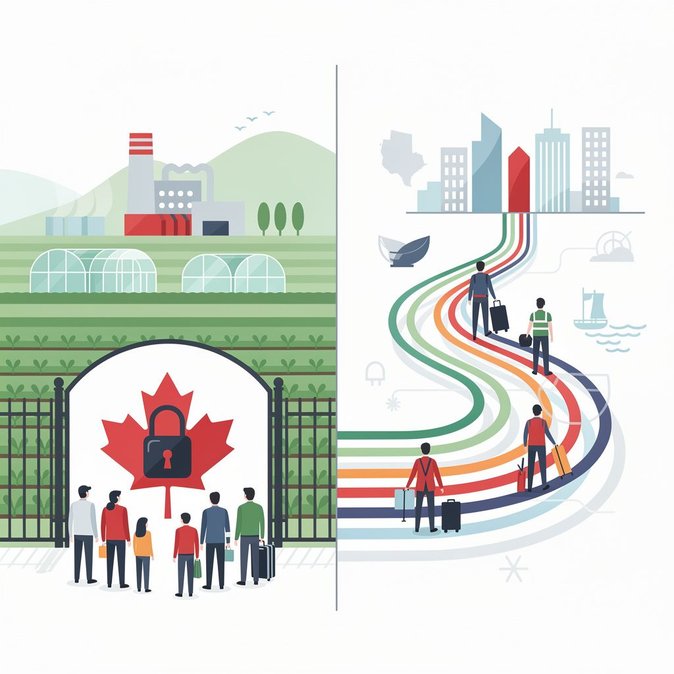
Haitian migrants who lost Temporary Protected Status (TPS) in the United States are increasingly travelling north in search of safety, only to discover that Canada’s border rules can separate parents from children at the port of entry. A Coast-to-Coast News investigation published on November 24 details how the Canada-U.S. Safe Third Country Agreement (STCA) disqualifies most refugee claims made at official land crossings and how recent Canadian reforms have tightened inland eligibility deadlines. Advocates interviewed at Lacolle, Quebec, say officers frequently admit one relative under the STCA family exemption while turning another back to U.S. authorities because the relationship does not meet the narrow definition in the regulations. The problem has intensified since U.S. TPS for Haitians finally expired on July 27 2026, exposing about 55,000 people to deportation. IRCC says its own Haiti-specific measures—extended on 27 October 2026—apply only to Haitians already inside Canada and do not create a new route for those arriving from the United States. Legal experts warn that families who attempt to cross irregularly to avoid the STCA now face another hurdle: Bill C-12, which became law on 26 March 2026. The legislation bars most refugee claims filed more than 14 days after an illegal entry, pushing would-be claimants into a slower pre-removal risk-assessment process. Human-rights groups argue the combined effect of the STCA and Bill C-12 undermines family unity and ignores the escalating violence in Haiti. For corporate mobility managers, the saga is a reminder that accompanying dependants may face very different legal outcomes even when travelling together. Employers relocating Haitian talent from the U.S. to Canadian operations should budget extra time for legal screening and be prepared for contingency plans if part of a family is refused entry. Cross-border commuters on U.S. work permits also need to understand that a brief trip into Canada could trigger STCA ineligibility on the way back. Canada has pledged $124 million over two years to modernise its asylum system, yet the rules remain complex. Companies that rely on the Intra-Company Transfer or Global Talent Stream to move Haitian professionals should arrange for legal briefings on admissibility and maintain robust travel histories to demonstrate compliance at ports of entry.
Source: CTC News