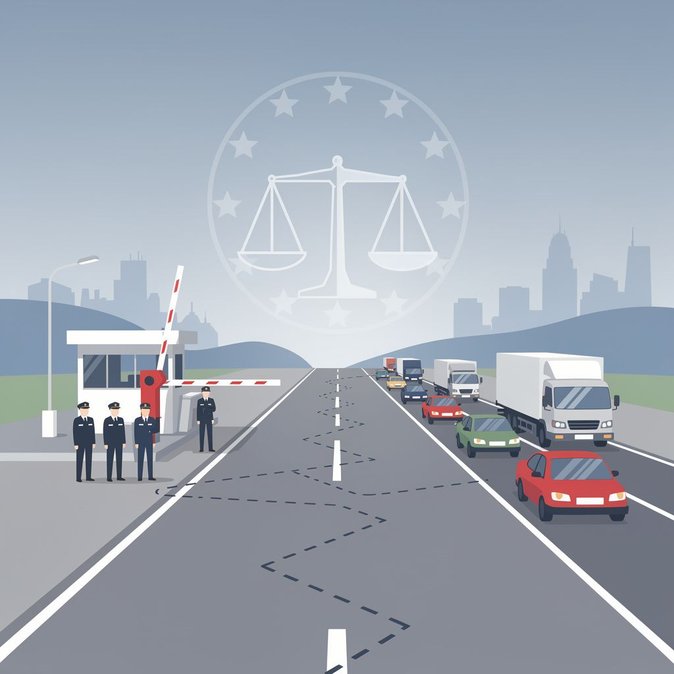
Immigration law firm Fragomen issued an alert on 24 November 2026 summarising the latest wave of internal-border extensions across the Schengen Area. Eight countries—Austria, Denmark, France, Germany, Italy, Norway, Poland and Sweden—have now notified Brussels that controls will run into the first half of 2027, citing migration pressure, organised-crime risks and heightened security threats. For Czechia, the most immediate impact comes from neighbouring Germany and Austria. Berlin’s regime covers all road and rail routes from Czechia until at least 15 March 2027, while Vienna’s checkpoints on the South-Moravian and South-Bohemian frontiers share the same timeline. Although travellers can still use any open crossing, police may stop vehicles to verify identity, visas and Schengen-stay limits—adding 10–30 minutes to coach and freight journeys during peak periods. Companies moving personnel between Prague, Linz and Munich should brief employees to carry passports or national ID cards and, for third-country nationals, proof of lawful Schengen stay. Visa-exempt staff must monitor the 90/180-day allowance carefully: a routine border stop that uncovers an over-stay can trigger a multi-year re-entry ban across the entire Schengen zone. The extended controls also interact with the EU’s new Entry/Exit System (EES). Officers can query the database in real time, making it harder for travellers to rely on unstamped passports as evidence of compliance. Employers are advised to keep digital records of travel histories and to schedule longer buffers for truck deliveries to Bavarian or Upper-Austrian plants. Politically, Prague faces a delicate balance. The government supports tougher external-border management but warns that indefinite internal checks undermine the Single Market. Czech officials are expected to push for stricter sunset clauses when the amended Schengen Borders Code is reviewed by the European Council early next year.