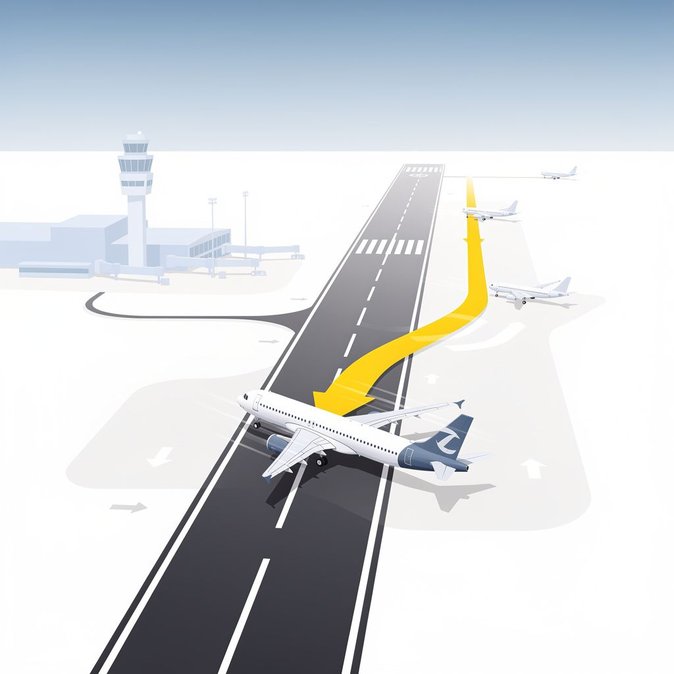
Zurich Airport commissioned the first of two rapid-exit taxiways (RETs) from runway 34 in the early hours of 26 November, capping a two-year construction project designed to squeeze more capacity out of Switzerland’s busiest runway without extra flights. RETs allow landing aircraft to vacate the runway at higher speed, cutting occupancy time and enabling closer spacing between arrivals. Airport operator Flughafen Zürich AG said the new southern RET will immediately shave up to ten seconds off runway occupancy for each landing, an incremental gain that adds up during peak morning and evening banks. For business travellers, that should translate into fewer holding patterns over the Alps and tighter connection windows—particularly valuable on Lufthansa Group hubs that rely heavily on on-time wave structures. Planning for the RETs dates back to 2003 but was delayed by legal challenges, the 2019 Sectoral Aviation Infrastructure Plan (SAIP) revamp and the COVID-19 pandemic. Construction finally began in April 2024, with most work occurring overnight to avoid disrupting movements. The northern RET is scheduled for completion in late 2027, after which the airport expects measurable reductions in delay minutes and fuel burn. Airlines serving Zurich, especially Swiss International Air Lines and its Star Alliance partners, welcomed the upgrade. Swiss estimates that the dual RET configuration could save more than 1,500 tonnes of jet fuel annually once both exits are live—a small but meaningful step toward its net-zero 2050 roadmap. Ground-handling crews also anticipate smoother gate allocations as arrival peaks even out. Travel-management and mobility teams should brief travellers that gate-to-gate times may improve modestly this winter. However, the RET does not alter noise-abatement flight paths, so communities south of the airport will not see traffic pattern changes. Zurich continues to pursue additional SAIP projects such as runway extensions and Skymetro modernisation, signalling further infrastructure-driven efficiency gains over the next decade.