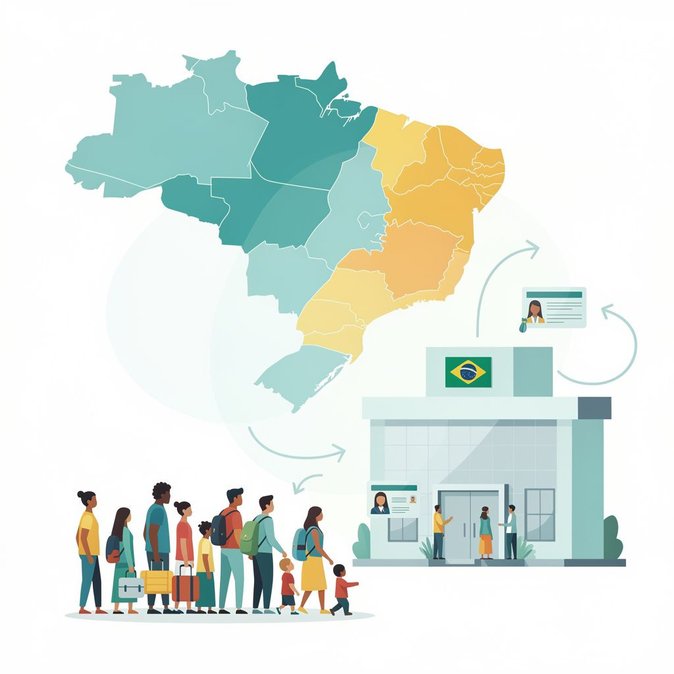
Brazil’s Secretariat for Justice (Senajus) will publish, on 27 November 2026, a “Guide for the Creation and Strengthening of Local Policies for Refugees, Migrants and Stateless Persons,” developed with technical support from the UN Refugee Agency (UNHCR). The initiative was previewed on 26 November by the Ministry of Justice and forms part of the country’s wider National Network of Welcoming Cities (RNCA). The 120-page manual offers municipalities templates for setting up dedicated migrant offices, issuing municipal ID cards, and coordinating with federal police for quicker issuance of National Migration Registration Cards (CRNM). It also details best-practice case studies from São Paulo, Boa Vista and Curitiba on integrating Venezuelan and Haitian newcomers into local labour markets. For employers relocating staff to Brazil, the guide promises more predictable local processes: city halls that adopt the recommendations commit to a 10-day turnaround for proof-of-address certificates and to recognise foreign professional licences under federal reciprocity rules. This could remove significant friction for assignees waiting to open bank accounts, enroll children in school or obtain driver’s licences. Corporate immigration providers are advised to monitor which of Brazil’s 5 568 municipalities formally sign up; early-adopter cities may become preferred hubs for green-field investments needing fast inbound mobility. The RNCA secretariat told UNHCR that a public dashboard tracking municipal adherence will go live in January 2027. The launch event will feature workshops on data collection; statistics from Brazil’s migration observatory (OBMigra) show that 236 000 new residence permits were issued in 2025, a 14 % year-on-year rise driven largely by regional free-movement accords. Accurate local data is seen as critical to planning housing, healthcare and Portuguese-language provision.