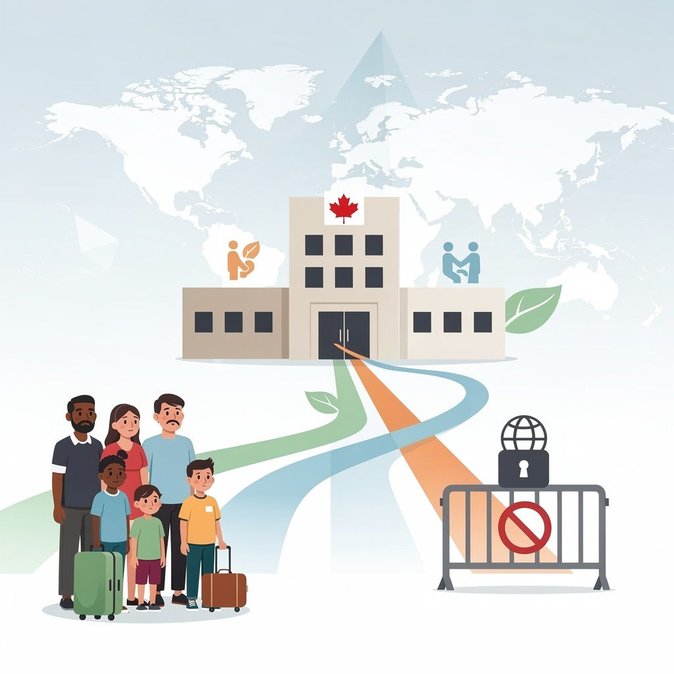
Immigration, Refugees and Citizenship Canada (IRCC) has renewed the suite of special measures that bar or delay travel to Canada for people who recently lived in the Democratic Republic of the Congo (DRC), Uganda or South Sudan, citing the continuing Ebola outbreak in Central Africa. The extension, announced in an IRCC notice dated 27 November 2026, prolongs all existing restrictions by a further 90 days, until 23:59 ET on 25 February 2027. Under the order, visas, electronic travel authorisations (eTAs) and other immigration documents issued to affected foreign nationals remain suspended—even if they were approved before the crisis began. New applications from the three countries will continue to be accepted and triaged, but they will not be finalised while the ban is in effect. The policy also empowers the Canada Border Services Agency to deny boarding to anyone who has been in the affected region within the past 21 days, unless they meet one of the narrow exemptions for Canadian citizens, permanent residents and immediate family members. The federal government first imposed Ebola-related travel restrictions in May 2026. Although the World Health Organization still classifies the DRC outbreak as a regional event, Ottawa says the “precautionary, proactive” approach is necessary to protect Canada’s public health system and to avoid diverting medical resources from its winter respiratory-virus surge. Friday’s renewal coincides with the original end date of the previous order and was widely expected by corporate mobility managers. For employers, the practical impact is two-fold. First, international assignees who happen to hold DRC, Ugandan or South Sudanese residence history—even if they are citizens of a third country—face automatic visa suspensions and will not clear pre-boarding checks. Second, global HR teams must build additional lead-time into assignment planning because no waiver process exists; applications simply sit in inventory until the order lapses. Companies with critical talent pipelines from East Africa are therefore re-routing work to third-country hubs or shifting projects to 2027. Mobility specialists should alert travellers and business partners that proof of itinerary outside the three countries is not sufficient. If an employee’s application file lists DRC, Uganda or South Sudan as a last country of residence, the suspension applies. Organisations should also monitor health-authority advisories; a widening outbreak could prompt Ottawa to add more countries—or impose entry testing—at short notice.