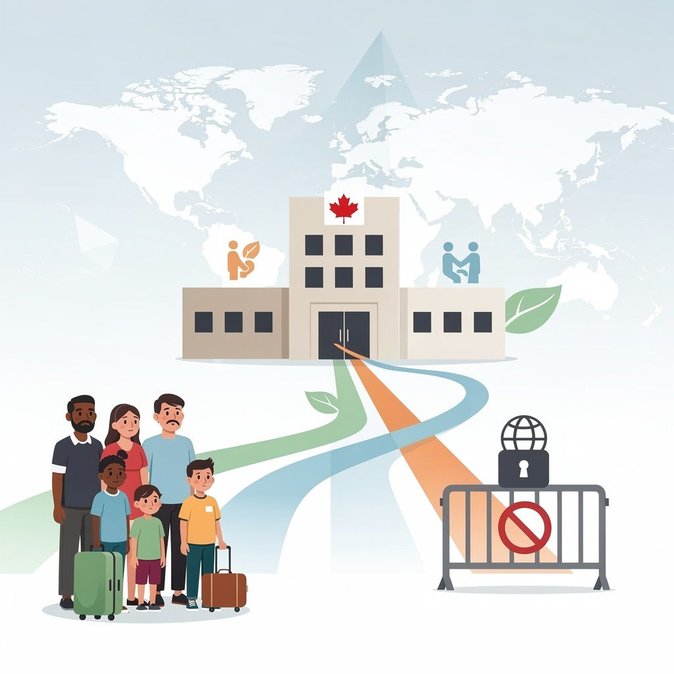
Seven months after capping the Blended Visa Office-Referred (BVOR) Program at just 50 admissions for 2026, Immigration, Refugees and Citizenship Canada has stopped accepting any new BVOR referrals altogether. The decision, announced internally on November 20 and reported publicly on November 27, 2026, effectively freezes one of Canada’s three long-standing refugee resettlement pathways. Under BVOR, refugees identified by the United Nations High Commissioner for Refugees were matched with community sponsors, with financial support split 50/50 between sponsors and Ottawa. IRCC says applicants already in the pipeline will continue to be processed and arrivals already matched to sponsors will go ahead as planned, but no fresh UNHCR referrals will be entertained. Settlement agencies reacted with dismay, arguing that BVOR offered a uniquely scalable model that leveraged private resources while maintaining protection standards. Marie Thompson of Halifax’s Open Harbour Refugee Association called the move “a blindsiding reversal that undercuts local capacity just as global displacement hits record highs.” IRCC counters that the program’s high administrative cost—82 arrivals against a target of 100 last year—no longer justifies continued intake when the Government-Assisted Refugees (GAR) and Private Sponsorship of Refugees (PSR) programs remain in place. For global mobility and corporate social-responsibility teams, the change narrows options for employee-led sponsorship initiatives that have become popular among Canadian companies seeking to support humanitarian causes while attracting future talent. Organisations that planned BVOR projects will need to pivot to PSR, which requires full-year financial support and a more complex application, or to the Economic Mobility Pathways Pilot for skilled refugees. Looking ahead, refugee targets under the 2027-2029 Immigration Levels Plan hold steady at 29,300 resettled refugees per year, but IRCC has signalled it will concentrate admissions through GAR and community-sponsored PSR streams. Sponsors should monitor forthcoming operational bulletins for revised quotas and consult legal counsel before reallocating funds earmarked for BVOR cases.
Source: Canada Immigration News