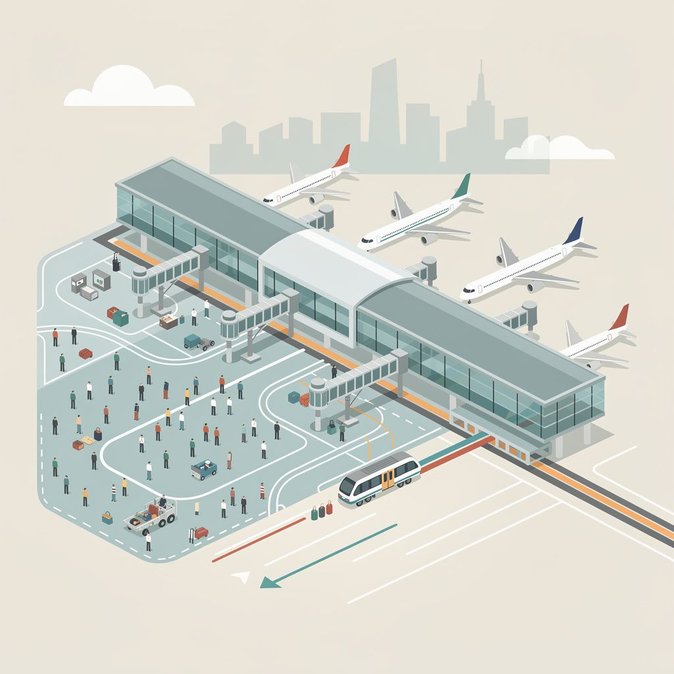
Hangzhou Xiaoshan International Airport has confirmed that all domestic flights operated by China Eastern (MU), Shanghai Airlines (FM) and China United Airlines (KN) will relocate from Terminal 3 to the newly-completed Terminal 4 South (T4S) at 00:00 on 1 December 2026. The move, announced on 26 November, gives the three carriers dedicated counter Islands Q (kerbside) and R (in the B2 transport hub) and channels all passengers through a consolidated South security checkpoint. The shift is part of Xiaoshan’s three-phase expansion plan designed to lift annual capacity to 80 million passengers by 2030 and position Hangzhou—home to tech giants such as Alibaba and Hikvision—as an alternative gateway for corporate travel to the Yangtze River Delta. T4S adds 27 contact gates and more than 120,000 m² of floor area, including a new air-rail-road interchange that links directly to Hangzhou Metro Lines 1, 7 and 19. From an assignment-management perspective, the key benefit is shorter minimum connection times for same-carrier domestic transfers. China Eastern estimates that passengers arriving on morning Shangri-La “red-eye” shuttles from Urumqi will shave 20 minutes off their connection into Shenzhen by avoiding the inter-terminal bus. The move also frees check-in Island G in Terminal 3 for additional Spring Airlines capacity, potentially easing peak-hour congestion. Travellers should double-check their boarding passes: tickets issued before 26 November may still show Terminal 3. If you arrive at the wrong building, airport staff at Island G will direct you to T4S, but the cross-terminal transfer can take up to 15 minutes landside. Those arriving by metro can drop bags at Island R in the transport centre before riding escalators to departures—a first for Xiaoshan and a feature foreign assignees familiar with Hong Kong or Seoul will recognise. The relocation underscores a broader trend: provincial airports are investing aggressively in terminal infrastructure to capture spill-over traffic from saturated hubs in Shanghai. For mobility planners, that translates into more routing options—and terminal-change alerts—through China’s tier-two cities.
Source: Deep Arrival