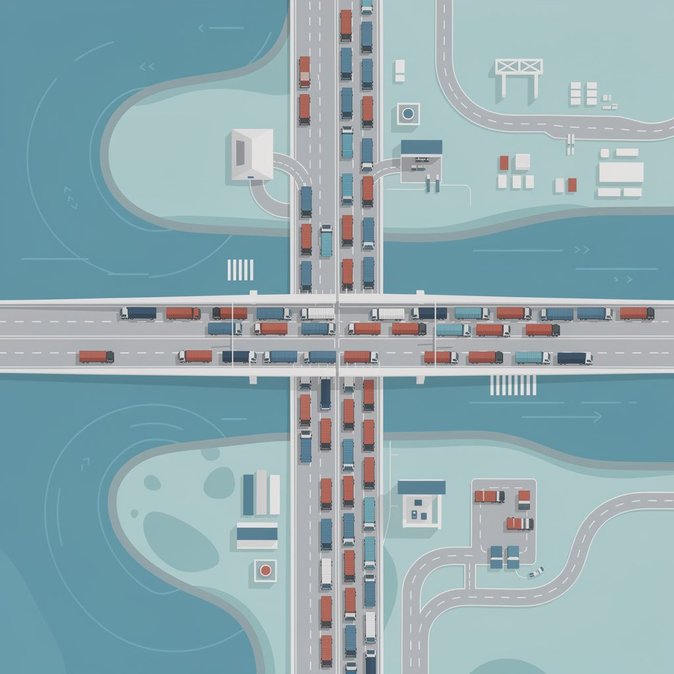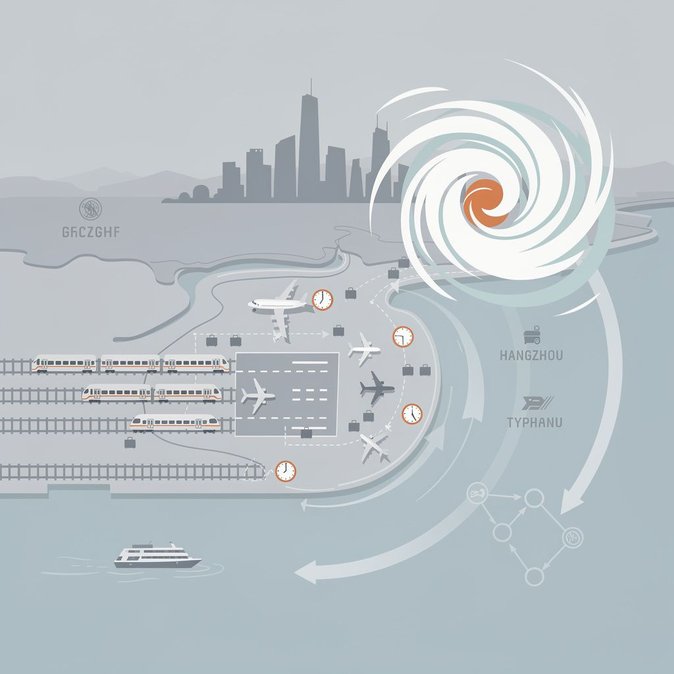
A rapidly-intensifying Typhoon “White Dolphin” barrelled into China’s eastern seaboard in the early hours of 27 November, grinding one of the world’s busiest business-travel corridors to a halt. Shanghai’s Pudong (PVG) and Hongqiao (SHA) airports—normally handling more than 2,300 movements per day—saw close to 60 % of operations axed, with 1,384 flights cancelled by mid-afternoon. Hangzhou Xiaoshan Airport reported a further 270 cancellations, while Ningbo, Wuxi and Nanjing issued rolling ground-delay programmes. The Civil Aviation Administration of China (CAAC) has activated its Level-II emergency plan, instructing airlines to re-book or refund passengers without penalty and positioning back-up crews at inland diversion fields. The aviation shutdown is only part of the picture. All ferry routes on the Huangpu and across the Yangtze estuary were suspended as 11-metre waves battered wharves; the Shanghai Metro slowed surface sections to 30 km/h, warning that complete line closures may follow if gusts exceed 9 on the Beaufort scale. Road transport is also affected—authorities closed the 35-km Hangzhou Bay Cross-Sea Bridge in both directions after cross-winds topped 120 km/h, severing the primary logistics artery between Ningbo’s container terminals and Shanghai’s airports. For corporate mobility managers the timing could not be worse. The last week of November traditionally marks the hand-over period for expatriate staff whose China contracts start on 1 January; relocation firms report warehousing space around Shanghai is already at 92 % capacity. Companies with regional headquarters in Pudong’s Free-Trade Zone are invoking continuity clauses that allow critical staff to work from Hong Kong or Seoul until flights resume. Insurers, meanwhile, expect a spike in claims for spoiled temperature-controlled pharmaceuticals stranded on the tarmac. Practical advice for travellers is straightforward but urgent: verify your flight status every few hours—even “operating” services are being retimed around weather windows—and keep hotel bookings flexible. Air-rail through-tickets have been automatically voided; passengers must re-book after the storm. Given lingering crew-duty imbalances, analysts predict it will take at least 72 hours for schedules to normalise once the typhoon clears inland. Looking ahead, the incident could rekindle debate about decentralising China’s aviation hub system. Pudong and Hongqiao together handle over 120 million passengers per year; when both go dark, the economic shockwaves travel far beyond the Yangtze Delta. The CAAC’s 14th Five-Year Plan proposes raising secondary airports at Hefei, Wuhu and Jiaxing to international status—events like “White Dolphin” may add political momentum to that strategy.
Source: GMT EIGHT