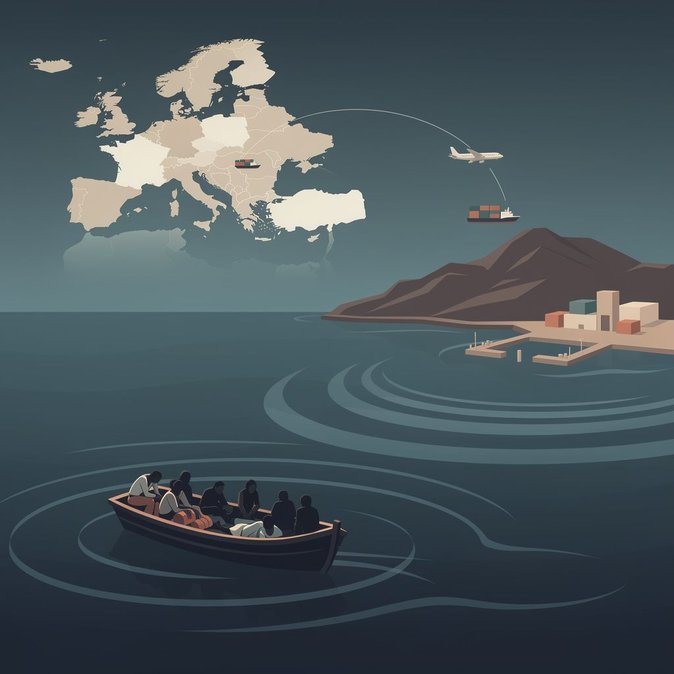
Reuters reports that maritime rescuers discovered eight bodies aboard a wooden boat carrying roughly 100 people 39 nautical miles south of El Hierro on 27 November. Six survivors were air-lifted to hospital in serious condition; the craft was later towed to La Estaca port. The incident came two days after a record 2,100 migrants landed on the archipelago in a single 24-hour period. Regional president Fernando Clavijo lamented “a humanitarian emergency that begins on the shores of Senegal and Gambia,” urging Madrid and Brussels to address root causes. Spain has deployed 120 troops and set up mobile clinics, yet reception centres remain over capacity. Prime Minister Pedro Sánchez has defended legal pathways and pressed the EU for joint returns agreements while opposition parties demand tougher controls. For multinational firms, the surge brings practical concerns: charter-flight slots are harder to secure at Tenerife and Gran Canaria, where Coast Guard operations now dominate apron space. Supply chains relying on Canary ports may see customs delays as Guardia Civil resources are diverted. Meanwhile NGOs warn of reputational risks for hotels contracted to host overflow arrivals. The deaths amplify scrutiny of Europe’s broader migration architecture during a period when businesses increasingly rely on mobile talent. Companies should watch for rapid regulatory shifts—such as temporary border checks or ID requirements—that could impact employee travel across the Schengen area.
Source: Reuters via Investing.com