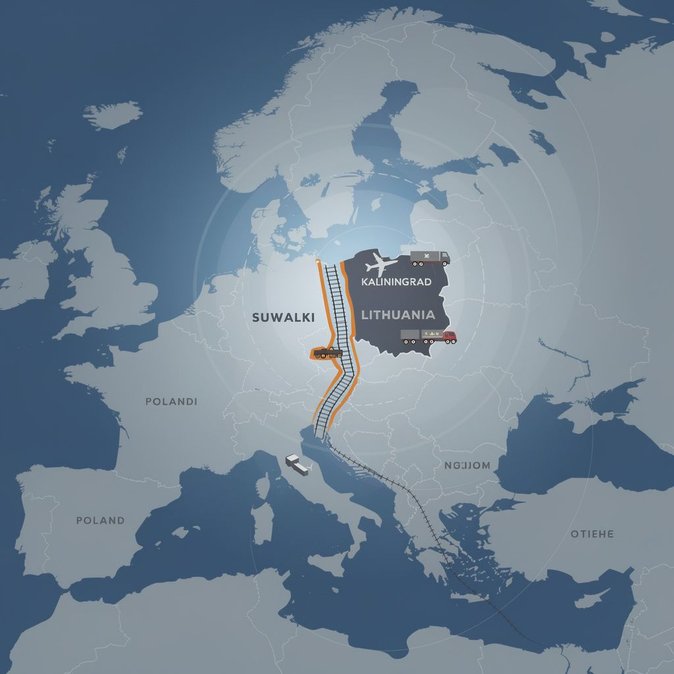
Brussels/Warsaw – A 27 November TIME magazine analysis of renewed sabre-rattling over Russia’s Kaliningrad exclave has propelled the 65-km Suwałki Corridor—a narrow strip of Polish-Lithuanian territory separating Kaliningrad from Belarus—back into geo-political headlines. Citing recently declassified Russian documents threatening “all necessary measures” if NATO attempts to “isolate” the enclave, defence experts warned that any escalation could see Moscow seek to cut the land link between the Baltic states and the rest of the Alliance. For mobility planners the corridor is more than a strategic map marker: it hosts the E67 “Via Baltica” highway and Rail Baltica construction sites, which together move thousands of lorries, project engineers and military convoys each week. A spike in military exercises or snap border closures could disrupt freight flows between Poland and Lithuania and delay expatriate assignments to Vilnius, Tallinn and Riga. Logistics providers have already queried insurance exclusions for “war-like events” in the zone. Poland’s Border Guard told local media that there is “no immediate change” to civilian crossing rules, but advised travellers to carry passports even on intra-Schengen journeys and to allow extra time for random inspections under the temporary controls that Poland re-introduced on 2 October. Several multinationals operating shared-service centres in Gdańsk and Poznań have activated political-risk monitoring protocols and reminded employees of alternative air-lift options via Helsinki or Stockholm should the land corridor face restrictions. The article also notes that Finland and Sweden’s accession to NATO in 2023-24 changed the strategic calculus, potentially deterring an outright move on Suwałki. Still, analysts say cyber-attacks or disinformation campaigns aimed at travellers remain plausible, and companies should reinforce traveller-tracking and emergency-communication procedures for staff using the corridor. While the probability of major conflict remains low, the publicity could prompt precautionary defence movements that affect commercial traffic. Mobility, trade-compliance and security teams should therefore view the Suwałki Corridor as a watchpoint through the first half of 2027.
Source: TIME magazine