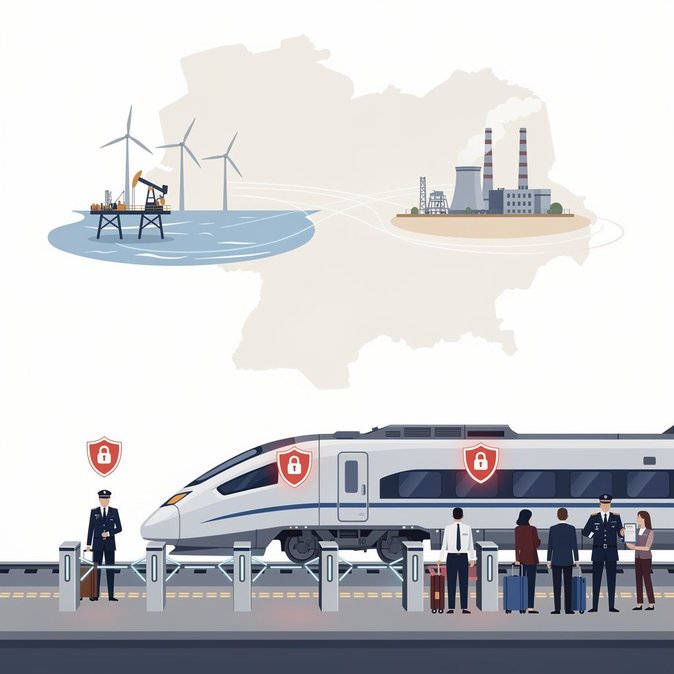
Poland’s Government Centre for Security (RCB) confirmed in its daily national risk bulletin of 27 November that two new anti-terror alarm levels will be introduced as of 00:00 on 1 December. Directive No. 65/2026 activates the BRAVO (level 2) alert for Polish energy infrastructure located *outside* the country’s borders—principally gas-pipeline compressor stations and power interconnectors in Germany, Lithuania and Slovakia—while Directive No. 66/2026 sets the higher CHARLIE (level 3) alert for the domestic broad-gauge and standard-gauge rail lines run by PKP PLK and PKP LHS. Under Polish law, a BRAVO alert requires site operators and border-control units to conduct additional identity checks, vehicle inspections and patrols. The CHARLIE alert obliges railway managers to restrict platform access, increase CCTV monitoring and prepare rapid evacuation procedures. The measures follow intelligence reports of possible sabotage attempts linked to Russia’s war on Ukraine and come just days before the high-traffic 6 December Saint Nicholas holiday weekend. For mobility planners, the immediate impact will be tighter checks at rail-cargo terminals in Małopolskie and Śląskie and slower border crossings for energy-company staff servicing assets in neighbouring states. Passenger services, including inter-city trains from Warsaw to Berlin and Vilnius, may experience longer boarding times and random baggage screening. Companies operating mobile workforces should budget extra transfer time and ensure employees carry photo ID at all times, even on domestic legs that normally require none. The government has not indicated an end date, stating the alerts will remain until further notice based on threat assessments. Employers with expatriate staff in critical-infrastructure sectors are advised to review emergency-contact trees and remind travellers to register with their embassy’s crisis-alert systems. While Poland has raised individual BRAVO or CHARLIE levels before, the simultaneous activation across cross-border energy sites and the national rail backbone is unprecedented and signals Warsaw’s growing concern about hybrid threats aimed at disrupting both freight logistics and the movement of people.