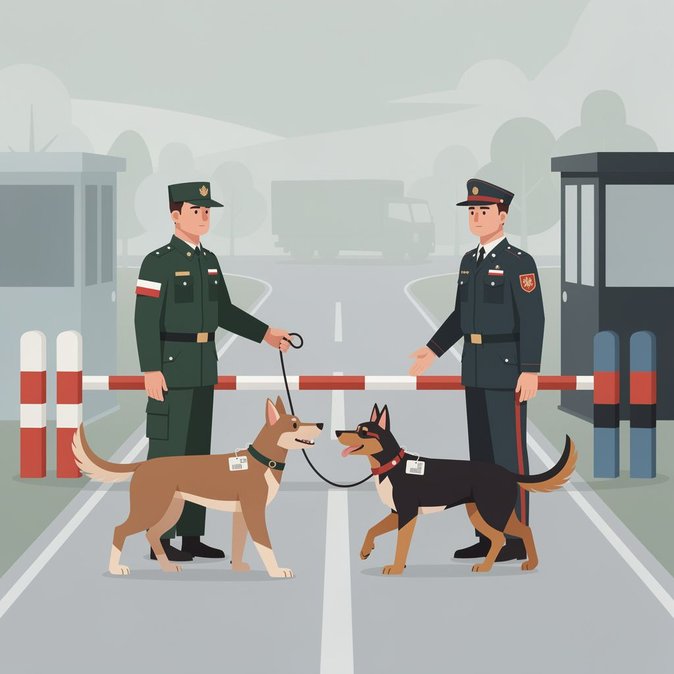
A curious border incident on 27 November underscored the practical workings of the bilateral agreement governing the hand-over of stray livestock and pets that inadvertently cross the Poland–Russia frontier. Two small mixed-breed dogs wandered across the closed pedestrian section of the Bezledy–Bagrationovsk crossing in the Warmia-Mazury region and were spotted by Polish guards on patrol. Following established procedure, the officers scanned the animals’ microchips, confirmed Russian registration, and coordinated a meeting with their Russian counterparts to return the pets. The same protocol was applied earlier this month when a horse strayed into Polish territory. While the incident made for lighthearted headlines, it illustrates ongoing day-to-day cooperation between border agencies despite the near-total suspension of regular passenger traffic since Russia’s full-scale invasion of Ukraine. Under the 2012 veterinary-sanitary accord, each side must return healthy animals within 72 hours, provided ownership can be proven via chip data or ear tags. For expatriates and business travellers stationed near the Kaliningrad border, the episode is a reminder that even seemingly sealed frontiers remain porous in unexpected ways. Companies operating logistics depots in Braniewo or Bartoszyce should ensure security teams know the reporting chain for accidental crossings—whether of animals, drones or vehicles—to avoid diplomatic friction. The incident also signals that communication channels between Polish and Russian border posts remain functional for operational matters, which could be leveraged if humanitarian or emergency transits were to be negotiated in future. From a compliance perspective, mobility managers relocating staff with pets should note that *personal* import of animals from Russia into Poland remains banned except under special veterinary derogations; the return-of-strays mechanism does *not* create a loophole for pet travel.