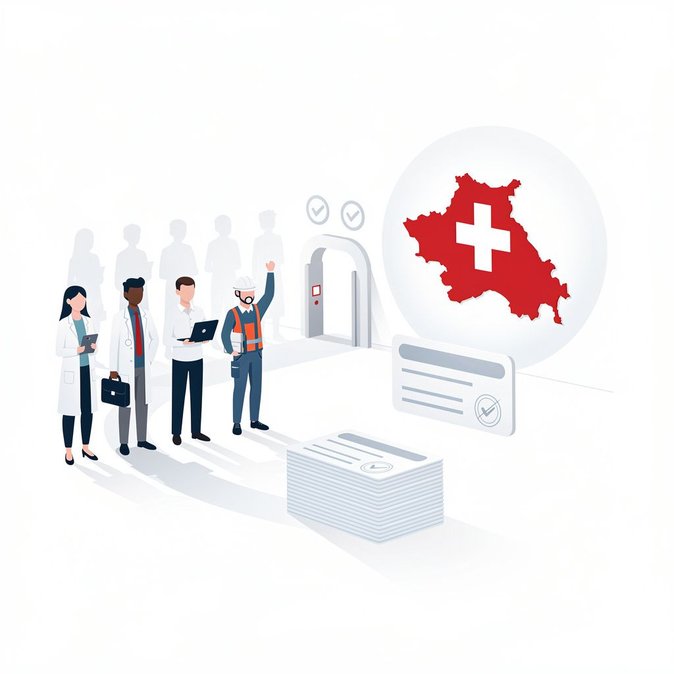
The State Secretariat for Migration (SEM) published a 120-page study on 28 November 2026 examining the social and economic integration of the roughly 72,000–82,000 people of Sri-Lankan and Tamil origin who now live in Switzerland. Conducted by the Swiss Forum for Migration and Population Studies at the University of Neuchâtel, the research combines federal statistics with interviews, focus-groups and an online survey of more than 1,000 respondents. The findings are largely positive. Tamil speakers show high rates of labour-market participation, low welfare dependency and markedly improved educational attainment in the second generation. Fluency in a national language and participation in local associations are singled out as key success factors. Migration experts note that the group’s arrival in the 1980s and 1990s coincided with a period when Switzerland expanded labour-market access for humanitarian migrants, allowing many to build stable careers. Yet the report warns that new policy questions are emerging. The first generation is reaching retirement age with comparatively modest pensions and may face language barriers when interacting with health-care providers. Many adult children still translate for their parents at doctors’ surgeries or public offices. Experiences of discrimination—particularly in housing and night-time economy settings—remain “significant but under-reported”. For employers, the study is further evidence that long-term integration pays dividends: second-generation Swiss-Sri Lankans are twice as likely as their parents to hold tertiary degrees and are over-represented in IT and engineering. Human-resources departments are advised to review age-related benefits and flexible-working policies to accommodate employees performing informal care roles for ageing relatives. Practically, the SEM says it will brief cantonal integration offices in early 2027 on the study’s recommendations and explore targeted language-support vouchers for older migrants. Multinationals that rely on intra-company transfers from Sri Lanka may benefit from the positive narrative when applying for L and B permits, but must also prepare for greater scrutiny of inclusion policies as federal authorities refine their integration benchmarks.