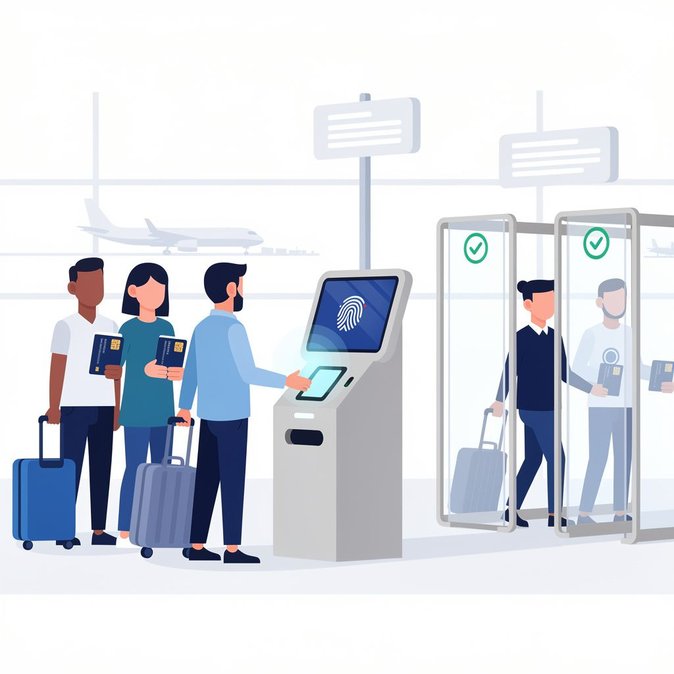
Geneva Airport has updated its border-control pages to reflect the final rollout of the European Entry/Exit System (EES) and the airport’s expanded network of automated kiosks and e-gates. The 28 November update explains step-by-step procedures for Swiss/EU travellers and for third-country nationals whose biometric data must now be captured electronically on first entry. Under the EES, non-EU visitors entering Schengen for short stays have their passport scanned, fingerprints and a live photo taken, replacing manual passport stamps. Geneva’s solution combines staffed counters with self-service kiosks that feed into e-gates, reducing officer time per passenger by an estimated 30 %. Travellers who enrolled earlier in the year can use the same automated lanes at departure, easing peak-hour congestion. For business travellers the key takeaway is to allow extra time—SEM advises first-time EES enrolments can add 10–15 minutes—and to travel with a biometric passport; non-biometric holders and children under 12 are routed to manual desks. Frequent flyers with Swiss residence (B or C permits) keep access to the fast e-gate channel provided they are aged 12 + on arrival and 18 + on departure. The airport further reminds passengers that waiting-time data are not published and that customs checks remain separate. Mobility managers moving assignees through Geneva should update travel briefs to include the new biometric requirements and consider pre-departure tutorials to minimise delays.
Source: Genève Aéroport