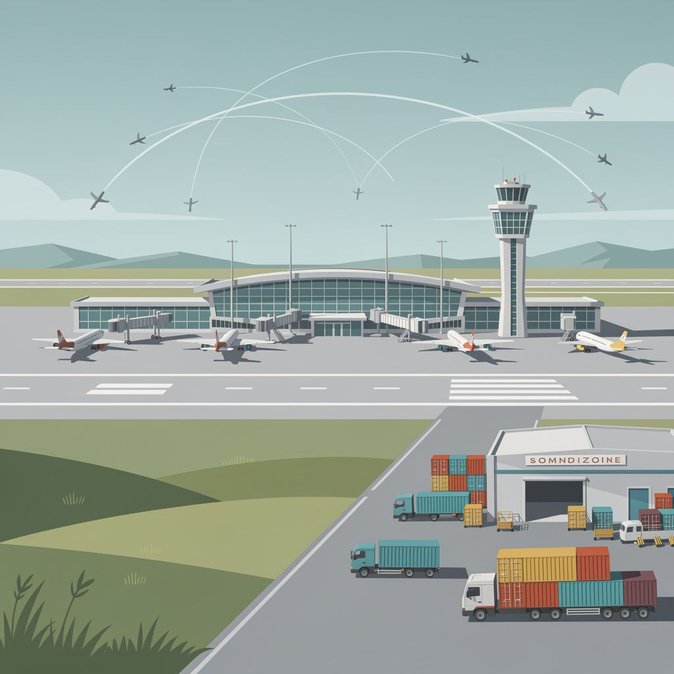
China’s airport modernisation drive reached a milestone this week as Hohhot Shengle International Airport officially replaced the ageing Baita facility, becoming Inner Mongolia’s first 4F-class international airport. Commercial operations began with a midnight switchover on 26 November, followed by a ribbon-cutting ceremony attended by civil-aviation officials and airline CEOs. Built for CNY 30 billion (USD 4.2 billion), the green-field airport boasts two parallel runways, 130 parking stands and a 320 000 m² terminal equipped for facial-recognition boarding and self-service immigration gates. Annual design capacity is 28 million passengers and 244 000 aircraft movements—roughly triple the throughput of the old airport. Cargo handling is projected at 320 000 metric tons, positioning Hohhot as a freight alternative to Beijing and Tianjin for trade with Mongolia, Russia and Europe. Air China, China Eastern and Tianjin Airlines have already moved their northern hub operations to Shengle, while low-cost carrier Spring Airlines plans to add routes to Japan, South Korea and Kazakhstan in the summer 2027 timetable. The airport’s bonded logistics zone will offer 24-hour customs clearance and aims to attract e-commerce distribution centres serving the China-Europe Railway Express. For mobility managers the upgrade means better connectivity for expatriates stationed in Ordos, Baotou and the Hohhot economic-development belt. Wider-body aircraft allowances (Code F) open the door to direct links with Frankfurt, Sydney and San Francisco, cutting travel times by four to six hours compared with Beijing transfers. Companies should adjust travel policies to reflect new route options and monitor introductory fare promotions that airlines typically offer when entering fresh markets. Civil Aviation Administration of China (CAAC) officials said Shengle demonstrates “the next generation of smart airports” with all-electric ground-handling vehicles and geothermal heating that will reduce carbon emissions by an estimated 140 000 tonnes annually—supporting China’s wider goal of a net-zero civil-aviation sector by 2050.
Source: Ecns.cn (Photo report)