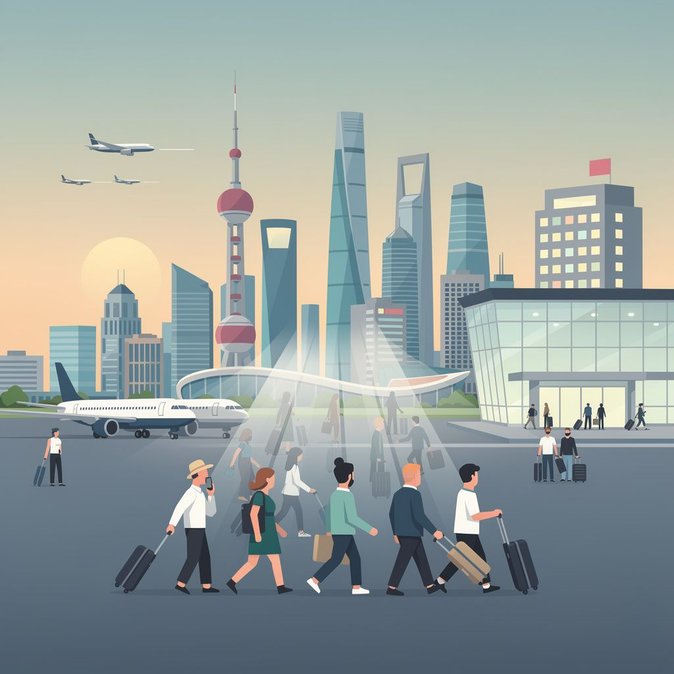
Shanghai is on track to become the first mainland Chinese city to surpass 10 million foreign arrivals in a single year, according to the Shanghai Administration of Culture and Tourism. Data released on 28 November show 9.28 million inbound visits between January and October—up 27 % year-on-year—and analysts now expect the figure to cross the eight-digit threshold in December. Several factors are converging to power the rebound. China’s 30-day unilateral visa-free entry programme for 48 countries, together with an expanded 144-hour transit-without-visa (TWOV) policy, has lowered administrative barriers and cut travel costs. Shanghai has also digitalised arrival procedures—foreign travellers can now pre-complete the National Immigration Administration’s online arrival card and link international credit cards to local mobile-payment wallets at Pudong and Hongqiao airports. The growth is broad-based. South Korea, Russia and the United States remain the top three source markets, but visitor numbers from Malaysia, Thailand, Australia and Germany are all climbing by double digits. Shanghai’s Wusongkou cruise port—a key gateway for business incentive groups—has handled 180 000 international passengers so far this year, a 49 % increase over 2025. Trip.com Group reports that foreign visitor spending per trip is up 32 %, with Australian tourists averaging 7.2-day stays and Korean travellers returning for repeat city-breaks. For corporate mobility teams the surge has practical implications. Peak-season hotel occupancy is already exceeding 85 % in central districts, and meeting-venue demand has pushed average daily rates 18 % higher than last year. Companies planning regional conferences or assignee look-and-see visits in the first quarter of 2027 are being advised to secure accommodation blocks early and to budget for longer visa-processing times in the event China’s current visa-free pilot is not renewed beyond 31 December 2026. Tourism officials say the milestone will reinforce Shanghai’s pitch as Asia’s premier meetings-and-incentives hub, but concede that bottlenecks remain. “We are shifting competition from volume to certainty,” Trip.com CEO Jane Sun said, noting ongoing pain-points around multi-currency payments and shortage of English-speaking tour guides. The city is rolling out multilingual signage on the Metro and accelerating plans for a second cruise terminal to spread visitor flows beyond the core Bund–Lujiazui district.