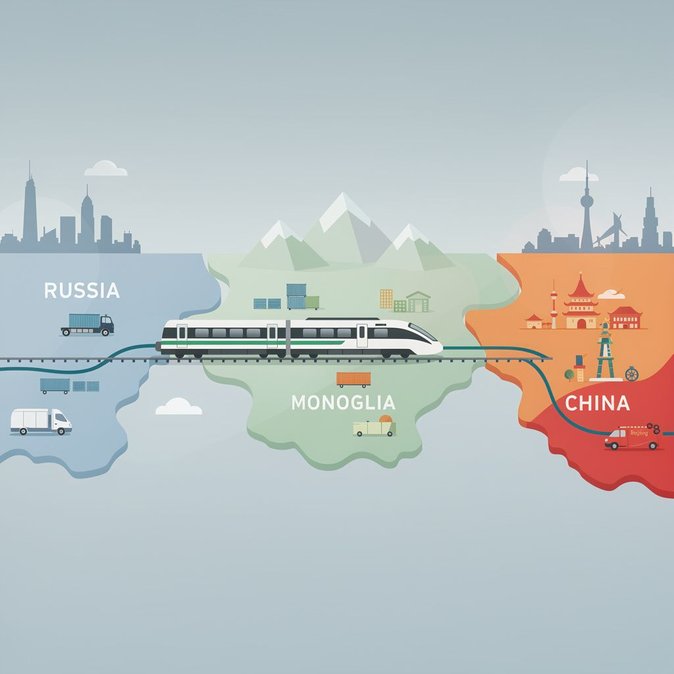
China’s overland links to Eurasia took another important step today, 28 November 2026, when the first Irkutsk-to-Beijing passenger train in six years eased out of Irkutsk Station at 09:30 local time. Operated jointly by China Railway, Mongolian Railway and Russian Railways, the weekly V3/V4 service had resumed its southbound run from Beijing on 25 November but today’s north-to-south departure completes the round-trip cycle, restoring a 2,666-kilometre corridor that was suspended in early 2020. Running via Ulaanbaatar, the train cuts a swathe through three countries in 55 hours, offering through-ticketing, sleeper berths and full dining-car service. Rail officials in all three capitals have framed the relaunch as a tangible outcome of President Xi’s “Belt and Road” rail connectivity push and of the Mongolia-Russia “Steppe Road” plan. According to China Railway, the inaugural northbound leg on 25 November carried 112 passengers—predominantly business travellers and rail enthusiasts—while today’s return trip sold out its 46 Chinese-quota berths within two hours of booking opening. For global mobility managers the significance is three-fold. First, companies with operations or suppliers in Siberia and Mongolia regain an alternative to limited air links, reducing travel times compared with multi-stop flights routed through Seoul or Moscow. Second, the train’s baggage allowance—two 25-kg pieces per passenger—makes relocation of small consignments cheaper than air freight. Third, the service offers an immigration “one-stop”: passengers clear China exit formalities on-board at Erenhot and complete Russian entry paperwork during the three-hour stop in Ulaanbaatar, eliminating separate airport visits. Industry analysts note that Russia’s rouble-denominated fares are roughly 35 percent below comparable air tickets, while the rail journey’s lower carbon footprint aligns with corporates’ ESG reporting. However, travellers should budget for two visa stops: China still requires Mongolian and Russian visas (or visa waivers) even though Mongolia offers 30-day visa-free entry to most EU passports and Russia grants simplified e-visas to Chinese nationals. Agencies also remind passengers that the rolling stock changes bogies at the China-Mongolia border to accommodate gauge differences—an operation that can add three hours to the schedule. Looking ahead, Chinese tourism boards are already bundling “Trans-Mongolian business-culture” packages for the Lunar New Year peak, and Russian officials told Rail Journal they are studying a summer through-coach to Lake Baikal. With freight volumes on the parallel corridor already at record highs, the revived passenger link signals that overland people-to-people flows are finally catching up.
Source: BRICS24