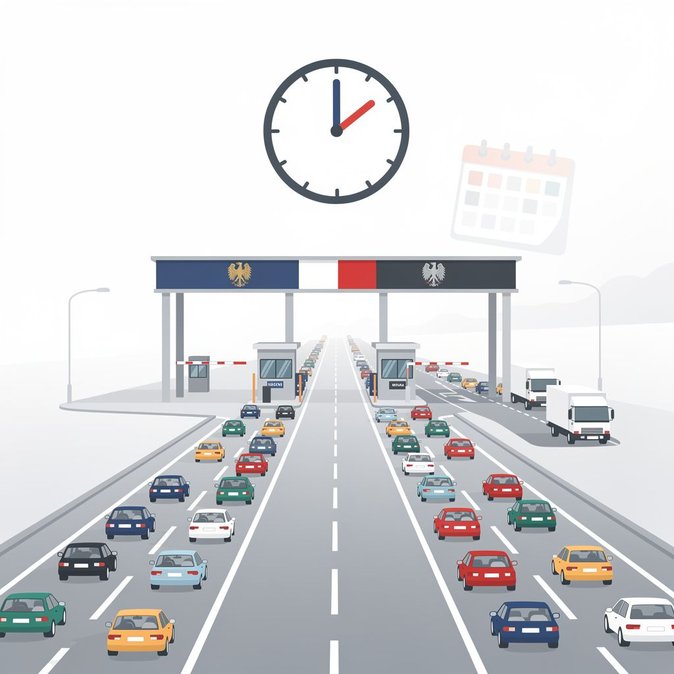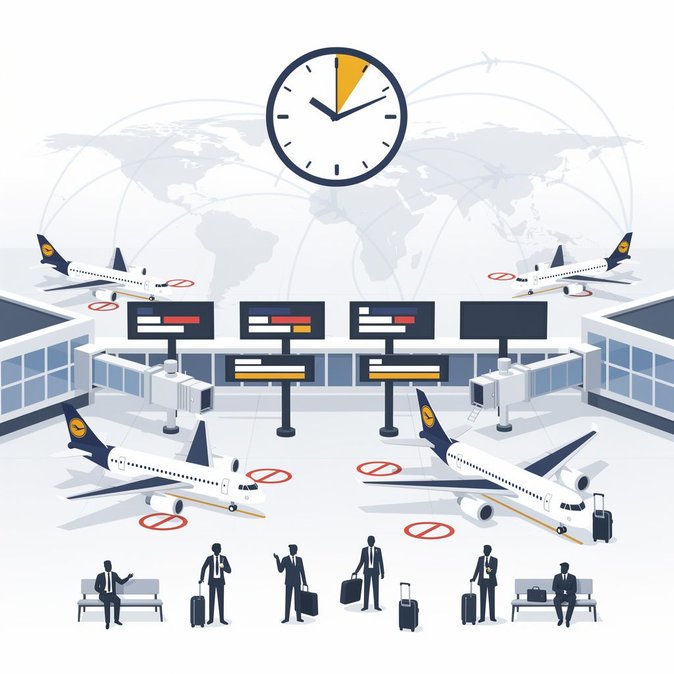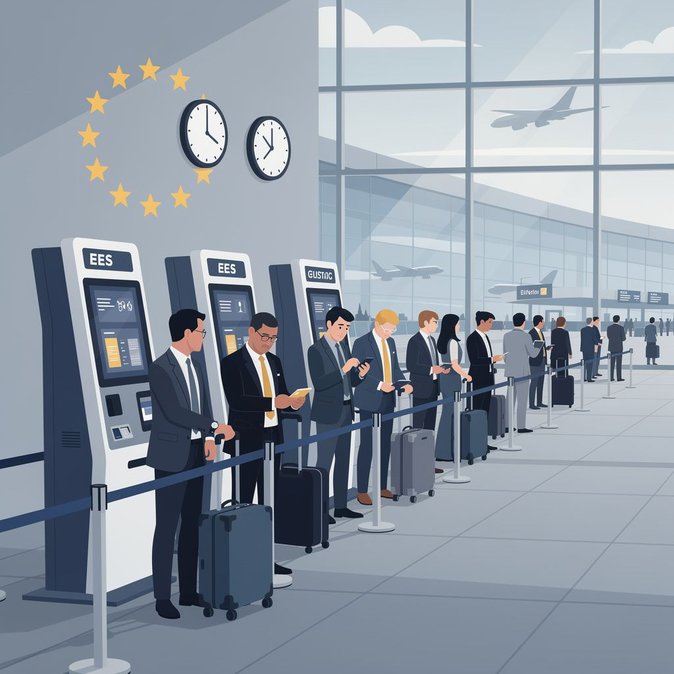
Airports, airlines and passengers woke up on 28 November 2026 to yet another warning about the EU’s new Entry/Exit System (EES). The industry portal “Travelling for Business” reported that the airline and airport associations A4E and ACI-Europe have renewed their call for an immediate pause of mandatory biometric capture at Schengen borders after monitoring stations continued to record waiting times of up to five hours at peak periods. The article singles out Frankfurt, Munich and Berlin Brandenburg as German hotspots, noting that Frankfurt Airport’s real-time tracker still showed queues at the automated EasyPASS booths on Monday morning, even though Germany has been allowed to run the so-called “biometric-flex mode” (a partial suspension of mandatory fingerprint capture) since September. For corporate travel managers, the associations’ plea is a stark reminder that the promised benefits of the €1.3-billion system are not yet materialising. Introduced formally in May, EES replaces the manual passport stamping of non-EU travellers with a shared biometric database. So far, bottlenecks stem from a mix of software glitches, insufficient staff training and an underestimate of kiosk-to-booth ratios. In Germany, the Federal Police conceded in October that e-gates had to be rebooted several times a day during the autumn school-holiday rush at Frankfurt. Although average waits have come down since, Monday’s figures still showed double-digit minutes for first-time registrations. The business implications are significant. Travel-policy benchmarks such as the Global Business Travel Association’s “door-to-door” standard assume immigration processing of under 30 minutes for premium itineraries; extended border checks can therefore invalidate connection buffers and raise duty-of-care risks. German exporters are particularly concerned that missed onward flights from Frankfurt and Munich could disrupt sales missions in Asia-Pacific at a time when air-capacity remains tight. What should companies do? Risk teams are urging travellers to add at least 60 extra minutes to their first arrival in the Schengen area until further notice, to register on airline-run ‘smart-queue’ apps where available, and to consider pre-clearing in lower-volume airports such as Stuttgart or Hannover. Travellers should also ensure that their passports have at least two blank pages; officials warned that damaged biometric chips still require a fallback manual process that takes longer under EES. Politically, Berlin is treading carefully. The Interior Ministry said it supports the industry’s six-point plan but wants any suspension to be “strictly time-limited” so as not to undermine data quality. With the grace period for airlines’ carrier-interface checks ending in January 2027, the next six weeks will decide whether EES can be stabilised without a legislative rethink.
Source: Travelling for Business