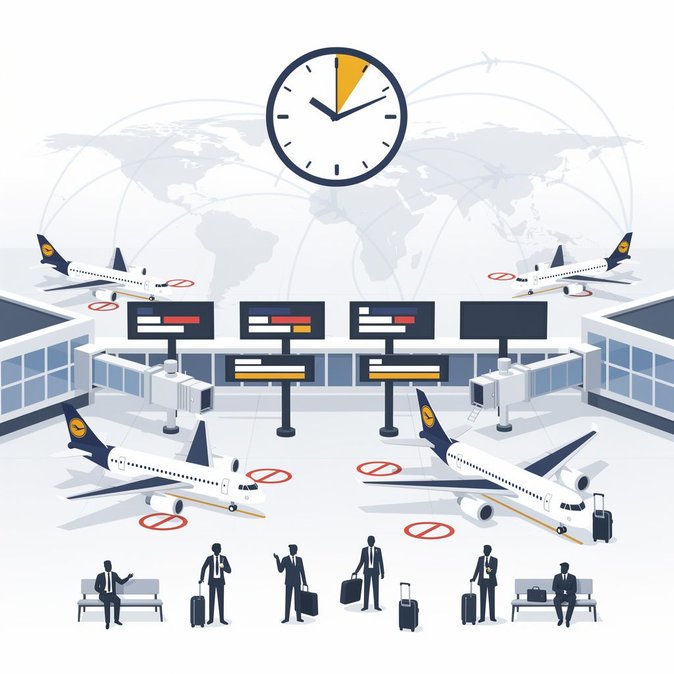
Germany’s flag carrier Lufthansa started the new week with an unwelcome surprise for passengers: by 07:00 CET on 28 November 2026 the independent tracker AirHelp had recorded 28 cancellations and 14 delays across the mainline and regional fleets. Among the affected services were the key business-shuttle rotations LH1683 (Budapest–Munich) and EN1379 (Air Dolomiti Wroclaw–Frankfurt), both scrubbed shortly before departure. The airline blamed “short-notice crew unavailability linked to seasonal sickness” but denied industrial-relations issues. While the raw numbers are small in percentage terms, the impact is amplified because many of the flights feed morning long-haul banks at the Frankfurt and Munich hubs. Travellers heading to São Paulo, Washington D.C. and Shanghai reported missed connections and rebooking queues of up to two hours. Several corporate travel managers told our newsroom that the disruption could trigger EU261 compensation claims worth up to €600 per traveller if Lufthansa cannot prove ‘extraordinary circumstances.’ The incident renews questions about the robustness of the carrier’s crew-reserve model. In its Q3 earnings call, Lufthansa said it had reduced the buffer to “industry-standard levels” after a costly summer of spare-pilot standby. Monday’s events show the margin for error remains tight. Unions were quick to point out that talks with cockpit association VC resume on 2 December, increasing speculation that ‘sickness levels’ could be tactical. For companies with time-critical travel, experts suggest booking the first wave of flights a day earlier where feasible and building redundancy into meeting schedules. Travellers already at the airport should use the Lufthansa App’s ‘self-service rebooking’ function, which often offers partner-airline alternatives faster than desk staff can process them. From a wider mobility perspective, any further deterioration risks denting Germany’s reputation for reliability just as the country intensifies efforts to attract foreign investors under its new Skilled Immigration Act. Seamless air access is part of that value proposition, and repeated operational hiccups could undercut the narrative.
Source: AirHelp Flight Tracker