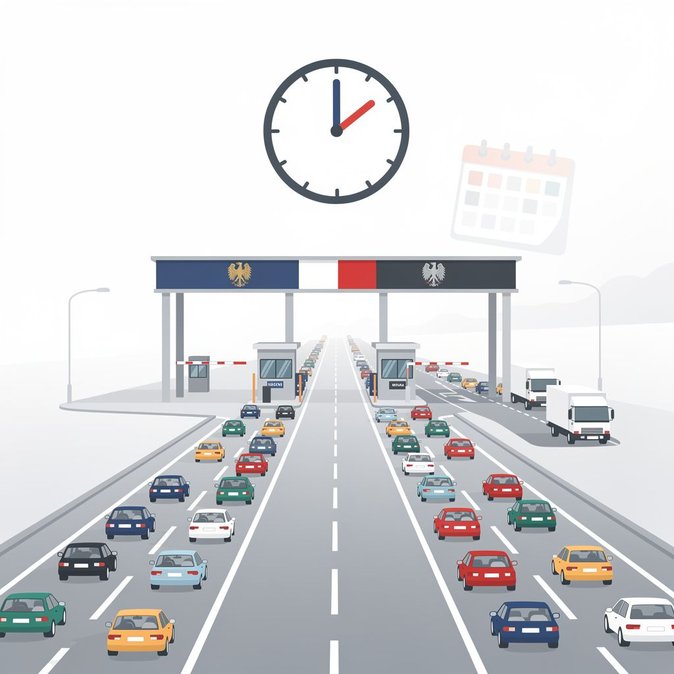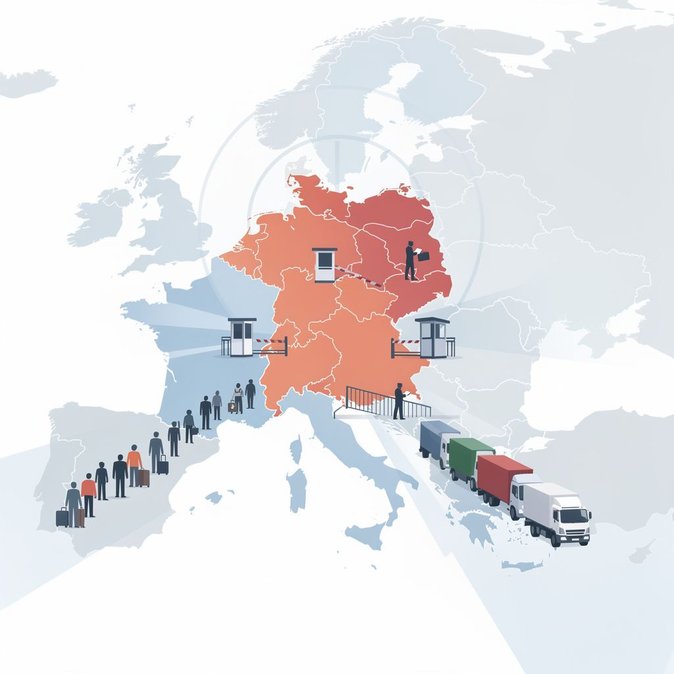
The European Commission’s updated register of Schengen internal-border notifications, released on 28 November, confirms that Germany will maintain land-border controls with France, the Benelux countries, Denmark, Poland, the Czech Republic, Austria and Switzerland until at least 15 March 2027. Berlin cites persistently high irregular-migration flows and the strain on asylum reception capacity as the legal grounds under Article 25 of the Schengen Borders Code. Germany originally re-introduced the controls on 16 September 2026 as part of a coordinated response to record asylum applications and smuggling networks operating along the Balkan and Eastern routes. The latest EU list formalises the first six-month prolongation and obliges Germany to file a risk-assessment report with Brussels. For cross-border commuters and logistics operators the practical impact is continued random passport checks and occasional vehicle inspections. While wait times have so far been modest outside peak holiday periods, freight forwarders warn that any sudden police surge can add hours to just-in-time supply chains linking German plants with suppliers in the Czech Republic or Poland. Mobility programmes should update travel policy FAQs to reflect the prolonged measure and remind staff that national ID cards remain valid for EU citizens, but third-country nationals must carry residence permits as well as passports.