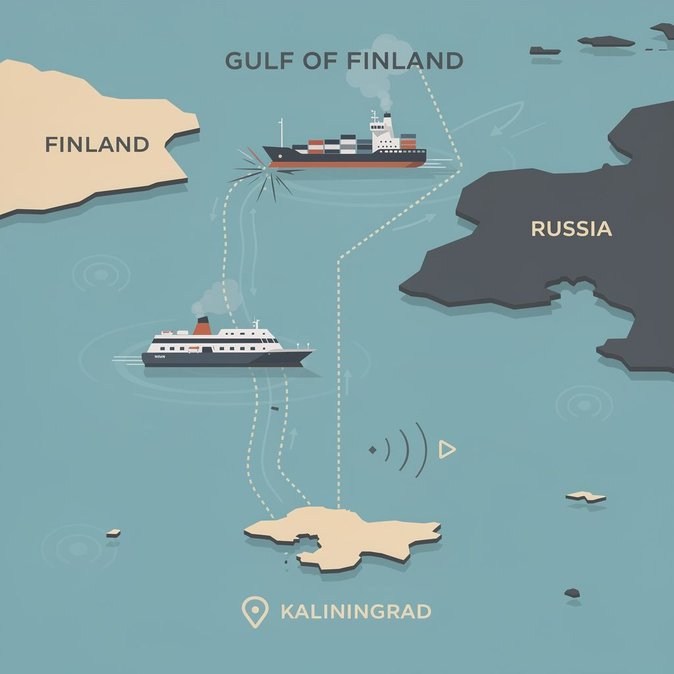
Regional tensions in the Baltic Sea escalated after Ukrainian forces claimed responsibility for a 21 November drone strike on the Russian cargo vessel Sparta II in the Gulf of Finland. TIME magazine reports that the incident has revived fears that Russia may retaliate by disrupting commercial traffic or undersea infrastructure—a scenario that would have direct repercussions for Finnish exporters and ferry operators. Moscow responded by allocating ₽47 billion (US$ 572 million) to build two railway ferries linking the Russian mainland to the Kaliningrad exclave, signalling concern that NATO members—Finland and Sweden joined in 2023 and 2024—could seek to isolate the enclave. Security analysts at RUSI told TIME that Russia views its Baltic supply line as a ‘long-term vulnerability’ and is therefore likely to step up naval patrols in the narrow Gulf. For Finnish logistics managers the immediate risk is accidental or deliberate interference with roll-on/roll-off cargo and passenger ferries that share the same sea lanes. The Gulf handles more than 15 % of Finland’s container throughput and is a key artery for automotive exports from Valmet’s Uusikaupunki plant. Insurers such as Gard have already added a security-surcharge clause to policies covering Baltic transits, and ferry operator Finnlines has alerted shippers to potential schedule changes if naval exclusion zones are declared at short notice. Multinational companies should review contingency routings via Sweden’s west-coast ports and ensure that seafarers receive updated ISPS briefings. Finnish authorities have not elevated the national threat level but the Defence Forces confirmed that exercise Narrow Waters 26-2, involving NATO mine-counter-measure units, will widen its observation area around the Gulf this week.
Source: TIME