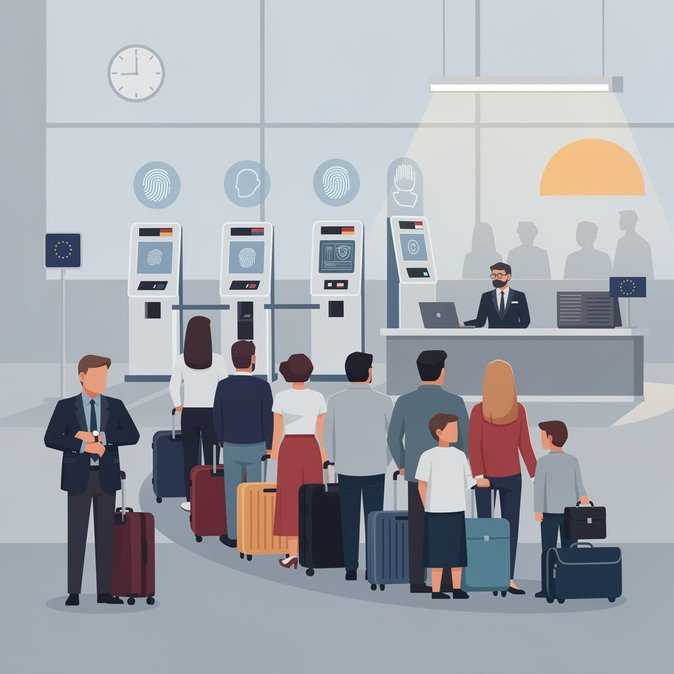
A coalition of more than 80 European tourism bodies—branded the Tourism Manifesto—has written to the European Commission asking for an emergency ‘pause button’ on mandatory fingerprint and facial-image capture at Schengen external borders. Since full enforcement of the Entry/Exit System (EES) resumed in September, airports from Lisbon to Prague have reported lines of two to five hours for third-country nationals, including UK passport-holders. Airlines have resorted to holding passengers on aircraft because arrival halls were full, while regional airports lacking space for new kiosks have had to cap traffic. The Manifesto wants Brussels to revive the discretion that allowed member-state border forces to switch off biometric collection when queues exceeded agreed thresholds. That flexibility expired after the summer peak, and the alliance argues that front-line staff, equipment and network resilience are still far from ready for the winter holiday surge. It points to a World Travel & Tourism Council survey in June showing 39 % of UK leisure and business travellers would avoid Schengen trips if repeated delays became the norm. For British companies the risk is operational as well as personal: missed connections strand sales teams, while duty-of-care rules oblige employers to assess extra time at border control. Travel managers are already building longer buffers into itineraries and advising staff to register through the limited pre-enrolment apps on offer. The alliance’s warning comes just weeks before the EU also introduces the separate ETIAS travel authorisation, compounding concern that the border experience could deter high-value visitors. No response has yet come from the Commission, which in October insisted that only ‘around 20 hotspots’ faced serious congestion and that a wholesale suspension was neither legally nor technically feasible. In the absence of relief, the Manifesto is urging carriers and airports to expand staffing, signage and ‘triage lanes’ for first-time biometric users, and is pressing member states to publish real-time wait-time data so that travellers can make informed decisions. UK firms with intensive continental travel programmes are being advised to maintain alternative meeting formats or non-Schengen destinations until the situation stabilises.
Source: Travelling for Business