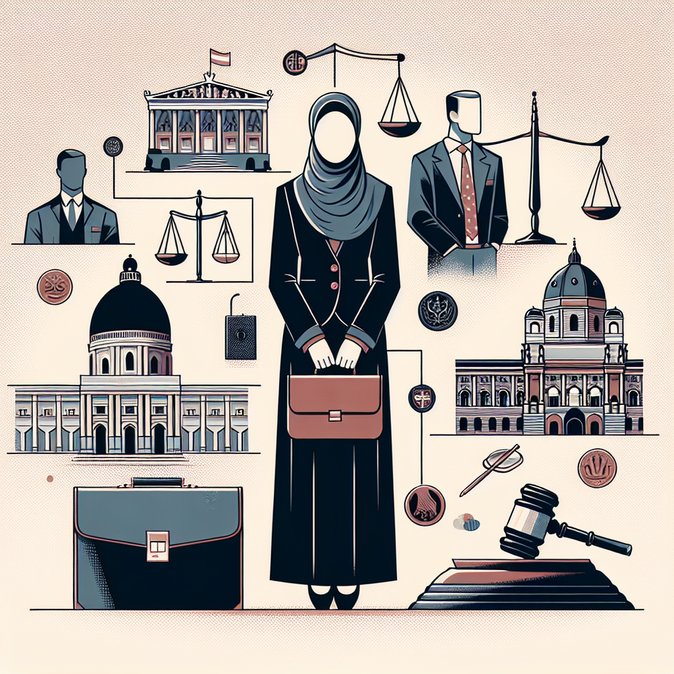
Austria’s National Council voted on 11 December to forbid Islamic headscarves for girls under 14 in all primary and lower-secondary schools, with fines up to €800 for repeat breaches. The conservative-led government frames the move as child protection, but rights groups and opposition MPs brand it discriminatory and likely unconstitutional—Austria’s previous, narrower ban was struck down in 2021.
The decision creates an unexpected mobility challenge. Vienna has aggressively courted talent from majority-Muslim countries via the Red-White-Red and EU Blue Card programmes; relocation advisers now warn assignments could be reconsidered or priced higher as families weigh the schooling environment for daughters. Places at international schools are limited and can cost €25,000 a year—fees employers may need to cover to retain Muslim staff.
![Head-Scarf Ban in Austrian Schools Raises Red Flags for Muslim Expat Talent]()
Legal uncertainty looms: fresh court challenges are expected, and the outcome will determine whether companies face a temporary irritant or a long-term barrier to diversity hiring. In the interim, HR teams should brief affected employees, explore school alternatives and consider flexible benefits or remote-work options.
More broadly, Amnesty International says the ban risks tarnishing Austria’s reputation as a welcoming tech and research hub just as global competition for AI and semiconductor specialists intensifies. Mobility managers should track the litigation calendar and adjust talent-acquisition messaging accordingly.
The decision creates an unexpected mobility challenge. Vienna has aggressively courted talent from majority-Muslim countries via the Red-White-Red and EU Blue Card programmes; relocation advisers now warn assignments could be reconsidered or priced higher as families weigh the schooling environment for daughters. Places at international schools are limited and can cost €25,000 a year—fees employers may need to cover to retain Muslim staff.

Legal uncertainty looms: fresh court challenges are expected, and the outcome will determine whether companies face a temporary irritant or a long-term barrier to diversity hiring. In the interim, HR teams should brief affected employees, explore school alternatives and consider flexible benefits or remote-work options.
More broadly, Amnesty International says the ban risks tarnishing Austria’s reputation as a welcoming tech and research hub just as global competition for AI and semiconductor specialists intensifies. Mobility managers should track the litigation calendar and adjust talent-acquisition messaging accordingly.
Source: VisaHQ Global Mobility News