Austria’s main gateway ended the year on a high note when it welcomed its 32 millionth traveller on 30 December – an all-time record that underlines the country’s post-pandemic rebound and Vienna’s growing role as a Central-European hub. The milestone passenger, arriving from Bucharest on Austrian Airlines, was greeted by city councillor Barbara Novak and airport co-CEO Julian Jäger, who highlighted the link between strong air connectivity and Vienna’s appeal for foreign investment and tourism.
For global-mobility teams the statistics matter: passenger numbers are up roughly 11 % on 2024 despite the departure of several ultra-low-cost carriers complaining about Austria’s air-transport tax. Austrian Airlines and its Star Alliance partners have filled much of the gap, adding Boston, Tbilisi and a seasonal Dubai return to the network – routes popular with corporate travellers and expatriate families. The airport is pressing the federal government to cut or restructure the €12–30 departure levy, arguing that it drives traffic to Bratislava and Munich and undermines Vienna’s ability to attract long-haul services crucial for headquarters decisions.
![Vienna Airport celebrates record 32 millionth passenger, signals capacity boost before EES peak]()
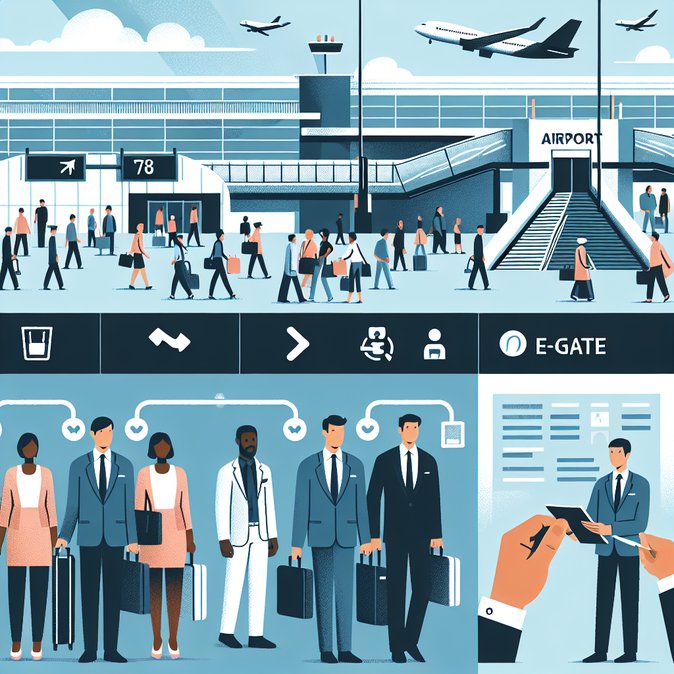
Operationally, management admitted that the record comes with growing pains. December holiday peaks coincided with the first big stress-test of the new EES kiosks; queuing times occasionally stretched to an hour for non-EU passport holders. To cope with expected summer volumes of 35 million passengers, the airport will bring forward the opening of six extra e-gates, add 200 front-line staff and accelerate construction of its T3 southern extension – now slated for partial opening in late 2026.
From a mobility-policy perspective the passenger boom reinforces the need for coordinated air-rail solutions. Vienna Airport is expanding its ÖBB Railjet codeshare, and Star Alliance carriers can now issue through-tickets to Salzburg, Linz, Graz and Innsbruck. This offers employers a greener, tax-efficient alternative to feeder flights, which remain subject to the controversial domestic-flight surcharge.
HR travel managers should update guidance on minimum connection times at VIE (add at least 20 minutes for first-time EES users) and monitor the ongoing tax debate, as any cut to Austria’s aviation levy would likely feed quickly into lower fares on expatriate-heavy intercontinental routes.
For global-mobility teams the statistics matter: passenger numbers are up roughly 11 % on 2024 despite the departure of several ultra-low-cost carriers complaining about Austria’s air-transport tax. Austrian Airlines and its Star Alliance partners have filled much of the gap, adding Boston, Tbilisi and a seasonal Dubai return to the network – routes popular with corporate travellers and expatriate families. The airport is pressing the federal government to cut or restructure the €12–30 departure levy, arguing that it drives traffic to Bratislava and Munich and undermines Vienna’s ability to attract long-haul services crucial for headquarters decisions.

Operationally, management admitted that the record comes with growing pains. December holiday peaks coincided with the first big stress-test of the new EES kiosks; queuing times occasionally stretched to an hour for non-EU passport holders. To cope with expected summer volumes of 35 million passengers, the airport will bring forward the opening of six extra e-gates, add 200 front-line staff and accelerate construction of its T3 southern extension – now slated for partial opening in late 2026.
From a mobility-policy perspective the passenger boom reinforces the need for coordinated air-rail solutions. Vienna Airport is expanding its ÖBB Railjet codeshare, and Star Alliance carriers can now issue through-tickets to Salzburg, Linz, Graz and Innsbruck. This offers employers a greener, tax-efficient alternative to feeder flights, which remain subject to the controversial domestic-flight surcharge.
HR travel managers should update guidance on minimum connection times at VIE (add at least 20 minutes for first-time EES users) and monitor the ongoing tax debate, as any cut to Austria’s aviation levy would likely feed quickly into lower fares on expatriate-heavy intercontinental routes.