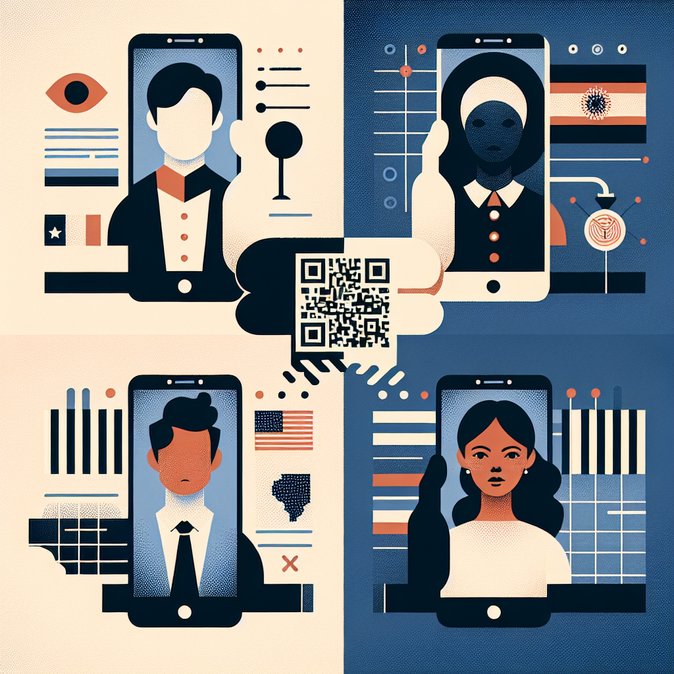
Brazil has taken a decisive step toward paper-free borders by announcing a four-country pilot that will allow travellers to store an electronic visa and facial biometrics in a secure mobile wallet. Under the agreement, unveiled late on 29 December and confirmed on 30 December, Brazil, Peru, Colombia and Uruguay will harmonise APIs for e-Visa issuance, selfie-biometric capture and real-time passenger-information exchange.
The first proof-of-concept—dubbed the “Cross-Border Wallet”—will hold a QR-coded Brazilian e-Visa tied to a liveness-verified facial template. Selected airline crew and corporate travellers will begin testing the system at São Paulo/Guarulhos and Rio/Galeão e-gates in Q2 2026. Participation will be voluntary, and paper passports remain valid, but officials have made clear that digital credentials will be the default by 2027.
![Brazil unveils regional e-Visa and biometric “Cross-Border Wallet” with Peru, Colombia and Uruguay]()
For multinationals the benefits are immediate: one application could cover a multi-country road show, reducing lead times from weeks to days and eliminating courier costs associated with physical passports. Airlines have already begun installing compatible e-gate readers, and Brazil’s Ministry of Justice is drafting rules that will require every international airport to accept the wallet by end-2026.
Privacy lawyers caution, however, that biometric templates will be shared across multiple national databases, triggering data-protection obligations under Brazil’s LGPD and similar laws in partner countries.
Mobility teams are advised to update consent forms, educate travellers on digital-credential use and pilot the wallet with frequent flyers to identify operational kinks before the wider rollout.
The first proof-of-concept—dubbed the “Cross-Border Wallet”—will hold a QR-coded Brazilian e-Visa tied to a liveness-verified facial template. Selected airline crew and corporate travellers will begin testing the system at São Paulo/Guarulhos and Rio/Galeão e-gates in Q2 2026. Participation will be voluntary, and paper passports remain valid, but officials have made clear that digital credentials will be the default by 2027.

For multinationals the benefits are immediate: one application could cover a multi-country road show, reducing lead times from weeks to days and eliminating courier costs associated with physical passports. Airlines have already begun installing compatible e-gate readers, and Brazil’s Ministry of Justice is drafting rules that will require every international airport to accept the wallet by end-2026.
Privacy lawyers caution, however, that biometric templates will be shared across multiple national databases, triggering data-protection obligations under Brazil’s LGPD and similar laws in partner countries.
Mobility teams are advised to update consent forms, educate travellers on digital-credential use and pilot the wallet with frequent flyers to identify operational kinks before the wider rollout.
Source: VisaHQ Global Mobility News
How VisaHQ can help
VisaHQ simplifies the visa application process for individuals and businesses. Check current travel requirements, prepare the required documents and manage your application online through the VisaHQ Brazil portal.More From Brazil
View all
Brazil’s Federal Police tighten holiday border checks after arresting Paraguayan fugitive with fake passport
Federal Police nab Paraguayan fugitive with fake Brazilian passport at GRU, tighten holiday border checks