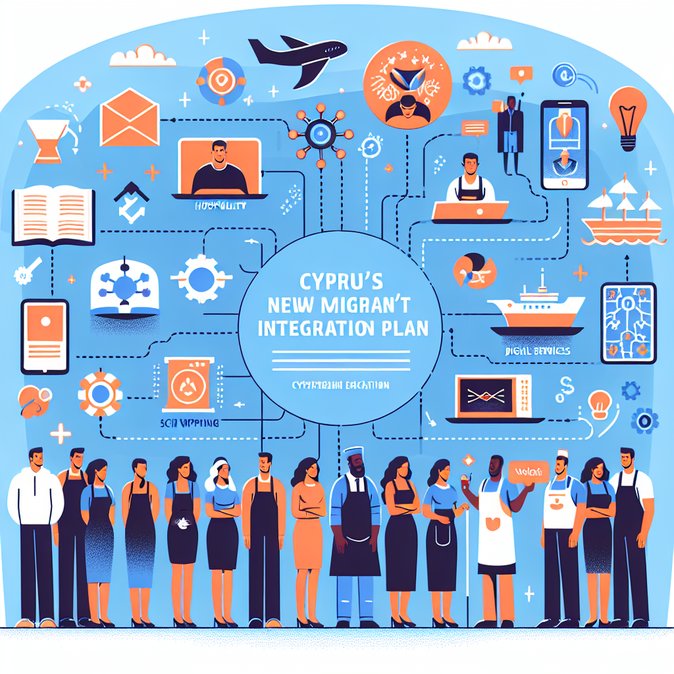
In a landmark decision that will shape the country’s labour market for the rest of the decade, the Cypriot Cabinet has endorsed the National Strategy for Migrant Integration 2026-2029. Drafted by the fledgling Deputy Ministry of Migration and International Protection, the four-year blueprint is the first time Nicosia has set measurable targets for bringing the island’s 150 000-plus legally-resident third-country nationals into the economic and social mainstream. (cna.org.cy)
Key pillars include mandatory Greek-language courses subsidised by the EU’s Asylum, Migration & Integration Fund; fast-track recognition of foreign vocational qualifications; and an online “one-stop shop” to streamline residence-permit renewals and employer notifications. Officials say roughly €60 million in EU and national funds will be channelled into programmes ranging from digital-skills boot camps for Ukrainian IT workers in Limassol to cross-cultural community mediators in rural Paphos.
![Cabinet Adopts Cyprus’s First National Strategy for Migrant Integration 2026-2029]()
For employers—from shipping companies and hotel chains to fintech start-ups—the strategy promises more predictable processing times for work-permit renewals and clearer pathways to permanent residence for high-performing staff. The plan also pledges to clamp down on exploitation by requiring labour inspectors to audit recruitment agencies and construction sites more frequently.
Cyprus’s integration push comes after a dramatic drop—86 percent—in irregular arrivals since 2022, allowing the government to pivot from emergency border control to long-term inclusion. The Deputy Ministry aims to have 70 percent of legal migrants attain at least A2-level Greek proficiency and 55 percent participating in employer-funded social insurance by the end of 2029.
Businesses are being urged to partner with vocational institutes to design tailor-made up-skilling courses, while municipalities will receive grants to open intercultural centres. Observers say success will hinge on adequate staffing at migration offices and the political will to enforce anti-discrimination statutes.
Key pillars include mandatory Greek-language courses subsidised by the EU’s Asylum, Migration & Integration Fund; fast-track recognition of foreign vocational qualifications; and an online “one-stop shop” to streamline residence-permit renewals and employer notifications. Officials say roughly €60 million in EU and national funds will be channelled into programmes ranging from digital-skills boot camps for Ukrainian IT workers in Limassol to cross-cultural community mediators in rural Paphos.

For employers—from shipping companies and hotel chains to fintech start-ups—the strategy promises more predictable processing times for work-permit renewals and clearer pathways to permanent residence for high-performing staff. The plan also pledges to clamp down on exploitation by requiring labour inspectors to audit recruitment agencies and construction sites more frequently.
Cyprus’s integration push comes after a dramatic drop—86 percent—in irregular arrivals since 2022, allowing the government to pivot from emergency border control to long-term inclusion. The Deputy Ministry aims to have 70 percent of legal migrants attain at least A2-level Greek proficiency and 55 percent participating in employer-funded social insurance by the end of 2029.
Businesses are being urged to partner with vocational institutes to design tailor-made up-skilling courses, while municipalities will receive grants to open intercultural centres. Observers say success will hinge on adequate staffing at migration offices and the political will to enforce anti-discrimination statutes.
Source: Cyprus News Agency (CNA)