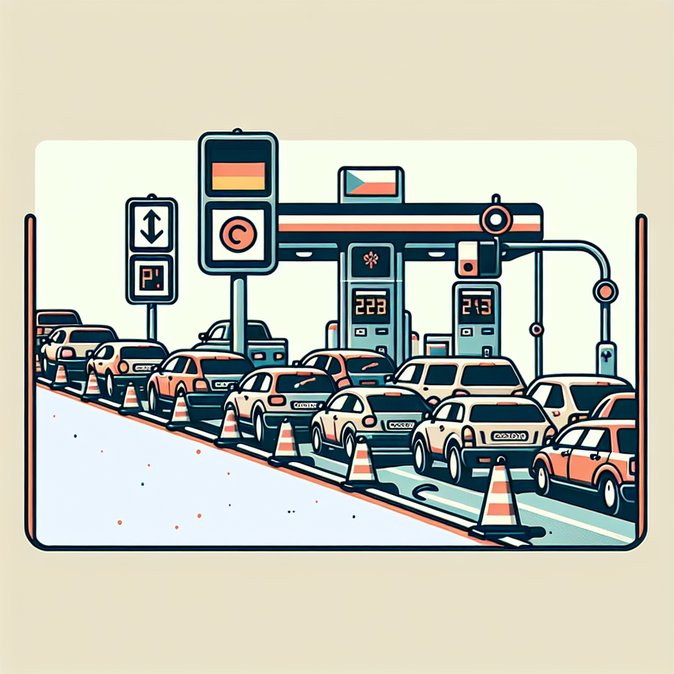
Poland’s decision to re-introduce a temporary cap on retail fuel prices on 31 March has produced the first measurable spike in cross-border traffic less than 24 hours later. Reporters from the Polish Press Agency (PAP) observed noticeably longer queues at filling stations in border towns such as Lubieszyn (West Pomerania), Kostrzyn nad Odrą (Lubusz) and Cieszyn (Silesia) on 1 April. Drivers with German and Czech licence plates were topping up vehicle tanks and filling 20-litre canisters before returning home, taking advantage of Polish petrol that is up to PLN 1.50 (≈ €0.35) per litre cheaper than across the border. Although the number of foreign cars remains far below the “fuel tourism” boom seen during the 2022 energy crisis, local station managers report a 20–30 % increase in non-Polish customers compared with the previous week. Under the government decree, the maximum price of standard unleaded (Pb-95) is PLN 6.21 and diesel PLN 7.66 per litre until 30 April; VAT on motor fuels has simultaneously been reduced from 23 % to 8 %. With German prices hovering around €1.89 per litre for petrol, a 55-litre fill-up in Poland can save a German motorist roughly €20, even after a 30-minute detour. The General Inspectorate of Road Transport (GITD) states that private motorists may legally carry up to 20 litres of fuel per vehicle in approved containers when they leave Poland, but commercial re-sale is prohibited. Customs officers have been instructed to watch for multiple same-day trips and for vans carrying excessive quantities. Fuel companies downplay any threat to domestic supply, noting that the cap is set well below wholesale cost and therefore financed directly by the state budget. Independent economists warn, however, that prolonged caps could distort regional markets and trigger retaliatory measures, such as tighter customs checks on Polish hauliers entering Germany. For logistics and mobility managers the short-term implication is positive: Polish fuel invoices will remain below EU averages for another month, reducing operating costs for fleets able to refuel domestically. But they should anticipate longer waits at border crossings—especially over the Easter holiday weekend—as casual fuel tourists add to already congested freight lanes. Companies running time-sensitive just-in-time deliveries via Świecko/Frankfurt (Oder) or Cieszyn/Český Těšín are advised to allow at least an extra hour for the outbound leg and to remind drivers of limits on exportable fuel to avoid fines.
Source: Money.pl
How VisaHQ can help
VisaHQ simplifies the visa application process for individuals and businesses. Check current travel requirements, prepare the required documents and manage your application online through the VisaHQ Poland portal.More From Poland
View all
Poland extends BRAVO and CHARLIE security alerts, keeping heightened checks on rail and energy corridors until 31 May
Driver shortage pushes Polish and Lithuanian hauliers to recruit 200 truckers from South America