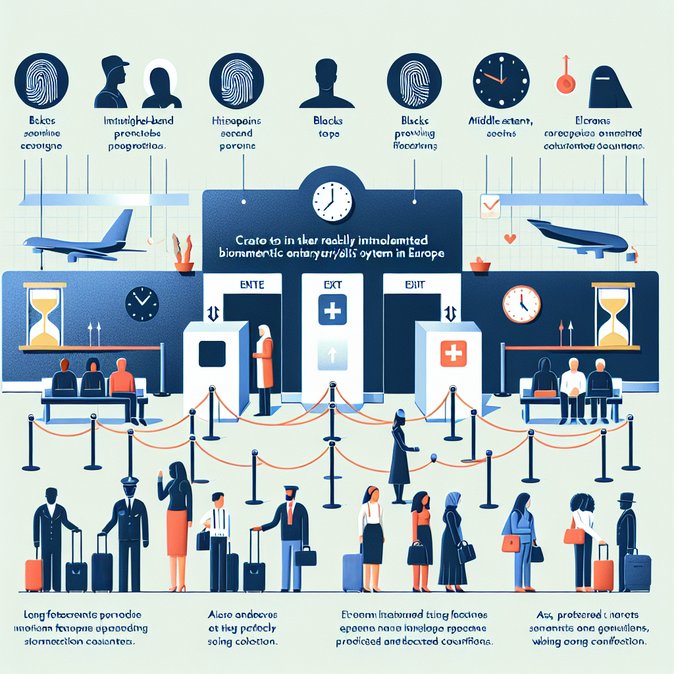
The European Union’s long-awaited biometric Entry/Exit System (EES) became fully operational today, 10 April 2026, replacing passport stamping for all non-EU arrivals—including Australians. Travel industry groups are cautioning passengers to allow up to four hours for border processing during the initial roll-out. Under EES, travellers must provide fingerprints and a live facial image the first time they enter the Schengen Area after implementation. The data are stored for three years and reused on subsequent trips, but airports that trialled the system last year reported security-lane processing times up 70 %. Lisbon Airport even suspended EES for three months after seven-hour delays. Airlines for Europe (A4E), IATA and Airports Council International warn that peak-season congestion could spill into air-side operations, jeopardising flight connections. They urge passengers from visa-exempt countries such as Australia, Canada and the U.S. to arrive extra early, pre-register via the EU’s Travel to Europe app and book longer layovers. Australian corporates with frequent travellers to Europe should adjust duty-of-care briefings and consider alternative routings via smaller entry points like Helsinki or Vienna, where throughput is expected to recover faster. Travel-management companies are updating predictive connection-risk tools to factor in EES processing. Although Australia’s own outbound SmartGate program has eased departures, there is currently no reciprocal fast-track for Australians entering Europe. ETIAS—Europe’s new travel authorisation—will layer onto EES later this year, potentially adding an online pre-screening cost of about €7 per traveller.
Source: Business Traveller