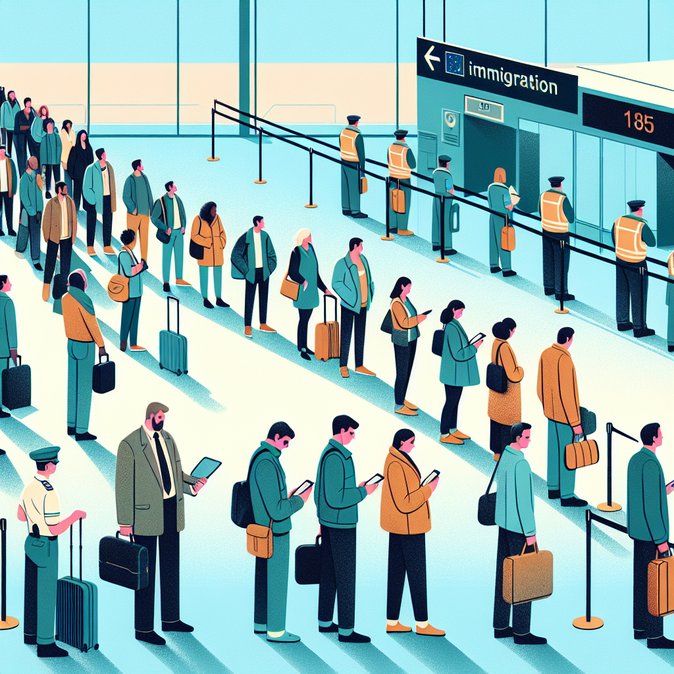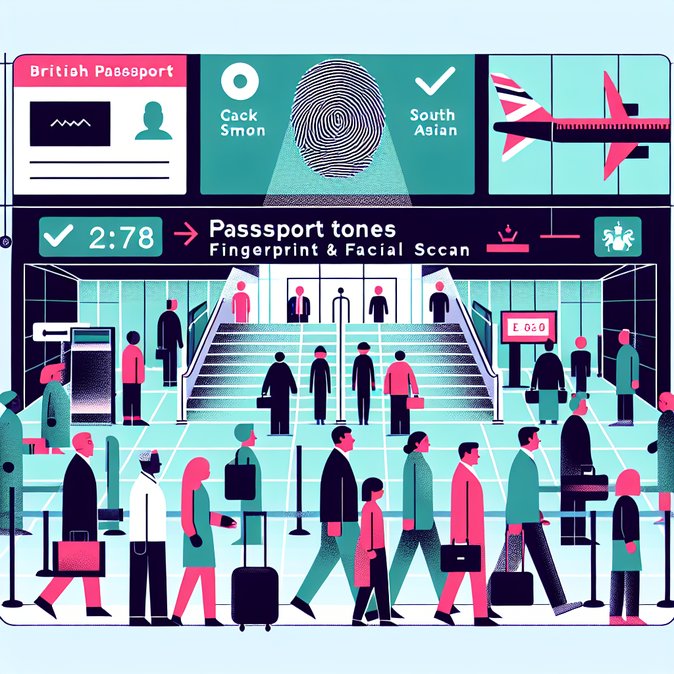
British holiday-makers received surprise relief on Monday when the Greek Embassy in London confirmed that UK passport-holders will be temporarily exempt from the EU’s new biometric Entry/Exit System (EES). The exemption, which took effect on 10 April but was only publicised late last week, means that Britons arriving in Greece no longer need to have their fingerprints and facial image captured at border kiosks. The move comes less than two weeks after the 29-country Schengen zone switched on EES in full, prompting scenes of three-hour immigration queues at several airports. Greek officials, conscious that nearly 4.5 million Britons visited the country in 2025, said the waiver is designed to “significantly reduce waiting times and ease congestion” during the May half-term and peak summer season. Eleni Skarveli, UK director of the Greek National Tourism Organisation, told business-travel outlet BTN Europe that the step should ensure “a smoother and more efficient arrival experience in Greece”. Hoteliers on the islands of Crete, Rhodes and Corfu have privately welcomed the change, warning that prolonged border queues could have triggered mass booking cancellations. For UK corporates the development removes an unexpected pain-point for assignees and conference delegates headed to Athens or popular resort venues. Travel managers should, however, note that biometric capture may still be required when travellers leave Greece or when transiting through other Schengen states; officials in Athens have not said how long the derogation will last. Carriers are therefore advising employees to leave extra time for outbound passport control and to keep boarding passes showing Greek entry stamps in case airlines request proof of lawful stay. The exemption also highlights the fragmented start-up of EES. While Brussels insists the system will ultimately speed up borders and tighten security, individual member states may carve out national exceptions if infrastructure or staffing proves inadequate. UK firms running large group movements to mainland Europe should monitor country-by-country rules and build flexibility—extra lay-over time, lounge access and traveller communications—into summer itineraries. Immigration advisers add that the biometric waiver does not change the 90-day Schengen limit or the forthcoming €20 ETIAS travel-authorisation requirement, slated for late 2026. Business visitors must still track cumulative stay across the bloc and keep supporting documents (invitations, hotel bookings, proof of funds) on hand in case of spot checks.