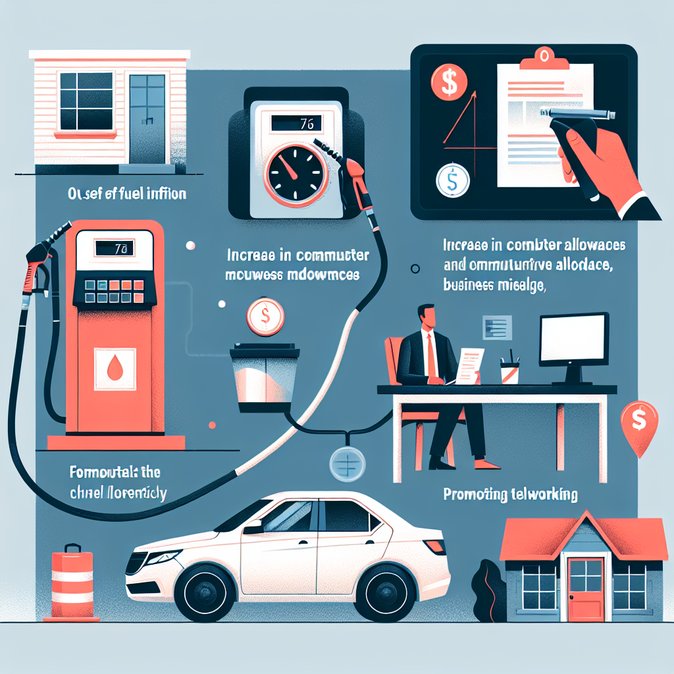
Belgium’s federal government has wrapped up a temporary “Energy Agreement” that will apply from April through June 2026, providing a package of measures aimed at cushioning households and employers against high fuel costs. Employment lawyers at Baker McKenzie caution that several clauses have direct implications for mobility policies. The headline provision introduces a tax credit for employers that raise their home-to-work commuting allowance by up to 20 %, capped at €0.10 per kilometre. Companies may opt in or out, but those that participate can claim the credit against payroll tax, effectively reducing the net cost of supporting staff travel. A second measure tweaks Belgium’s lump-sum kilometre allowance for professional travel in a private vehicle. For Q2 2026 the ceiling will be recalculated monthly instead of quarterly to reflect real-time fuel prices; the exact figure (currently €0.4327/km) will be published in early May. Employers reimbursing above the new limit risk triggering taxable benefit-in-kind charges, so payroll teams must watch the official gazette closely. Finally, the agreement “strongly encourages” public-sector bodies to expand telework for three months and invites private employers to do the same. Although no new obligations are imposed, auditors warn that companies re-introducing large-scale remote work must update written telework policies under the 2022 CCT 149 framework. Global-mobility managers should re-examine commuter-benefit budgets, mileage-claim templates and assignment contracts that reference fixed allowances. The measures expire automatically on 30 June unless Parliament votes to extend them.
Source: Baker McKenzie Insight