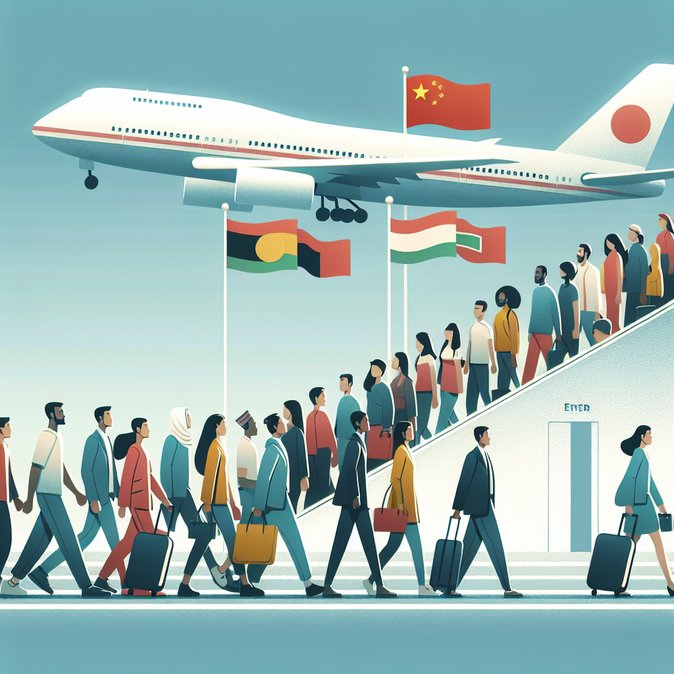
China’s border inspection authorities handled 11.279 million inbound and outbound trips between 1 and 5 May, according to figures released on 7 May. Daily flows averaged 2.256 million—3.5 percent higher than the same holiday in 2025—with a record 2.529 million crossings on 2 May. The National Immigration Administration attributes the growth to streamlined e-gate processing, the rollout of QR-code health declarations and the widening of visa-free entry channels. Of the total, 1.255 million trips were made by foreign nationals, a 12.5 percent year-on-year rise. Visa-free entrants accounted for 436,000 of those journeys, underscoring the appeal of China’s expanded waiver schemes. The data offer hard evidence that China’s reopening phase is entering a more mature stage. Airlines added nearly 1,200 extra international sectors for the holiday period, while cruise lines resumed home-port calls at Shanghai and Shenzhen. High-speed rail links to Hong Kong also operated at 98 percent of pre-pandemic frequency. For companies relocating staff, the figures suggest that processing times at major airports are stabilising below the NIA’s 30-minute benchmark, reducing the buffer HR teams must build into travel schedules. Nevertheless, peak-day congestion remains a risk at land crossings such as Shenzhen’s Futian Port and the Hong Kong–Zhuhai–Macau Bridge, where biometric e-gates are still being calibrated for foreign passports. Travel platforms report a qualitative shift too: long-haul bookings (South Africa, Belgium, Kenya, Brazil) grew faster than short-haul Southeast Asian routes, hinting at a move toward higher-value, longer-duration trips—a trend global mobility managers may need to factor into assignment logistics and budgets.