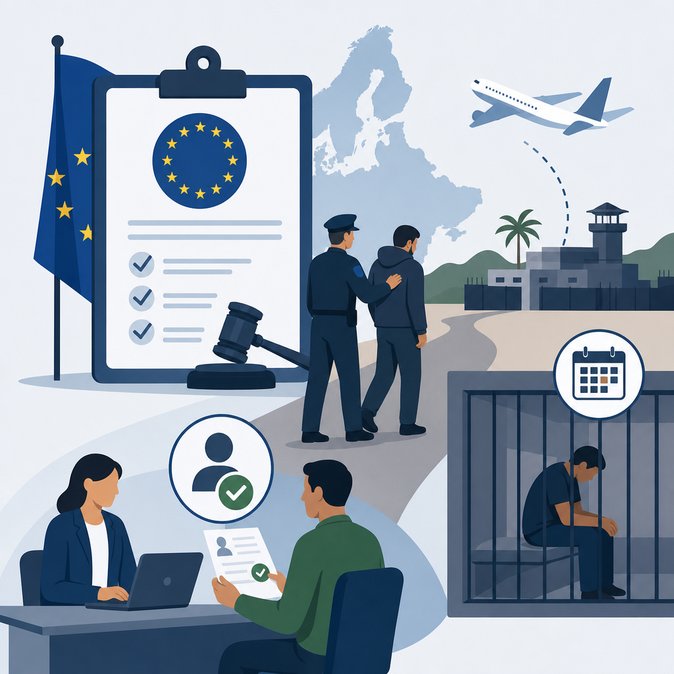
Meeting late on 1 June, EU negotiators finalised the last piece of the Migration & Asylum Pact: a Regulation on Returns that dramatically expands member states’ power to expel undocumented migrants. The text—adopted on 2 June—lets countries develop “return platforms” in third states where rejected asylum seekers can be transferred even if their country of origin refuses readmission. Detention periods rise to a potential 30 months and re-entry bans extend to 10 or 20 years.
For employers and individuals looking to stay on the right side of these evolving rules, VisaHQ offers practical help by streamlining Belgian visa and permit applications. Its portal (https://www.visahq.com/belgium/) aggregates current entry requirements, assists with document preparation, and highlights any outstanding immigration issues that could derail a submission before it reaches the authorities.
For Belgium, which issued just 4,200 effective return orders in 2025 against 15,000 decisions to leave, the Regulation promises stronger EU coordination via Frontex and legal grounds to detain absconders longer. Federal Interior officials told Le Monde they expect to pilot joint flights with the Netherlands and Germany as early as Q4 2026. Human-rights NGOs have condemned the deal as a “massive setback”, but business-immigration advisers say clearer enforcement rules could shorten single-permit processing times: files currently slow down when background checks reveal an outstanding order-to-leave. With the new system, applicants with unresolved return decisions should be filtered out faster, giving employers greater certainty. Companies should, however, prepare for reputational risks if partner governments choose African or Asian return-hub countries with poor rights records. Due-diligence teams may wish to screen supply-chain partners that could be implicated in logistics or facility management at such centres.
For employers and individuals looking to stay on the right side of these evolving rules, VisaHQ offers practical help by streamlining Belgian visa and permit applications. Its portal (https://www.visahq.com/belgium/) aggregates current entry requirements, assists with document preparation, and highlights any outstanding immigration issues that could derail a submission before it reaches the authorities.
For Belgium, which issued just 4,200 effective return orders in 2025 against 15,000 decisions to leave, the Regulation promises stronger EU coordination via Frontex and legal grounds to detain absconders longer. Federal Interior officials told Le Monde they expect to pilot joint flights with the Netherlands and Germany as early as Q4 2026. Human-rights NGOs have condemned the deal as a “massive setback”, but business-immigration advisers say clearer enforcement rules could shorten single-permit processing times: files currently slow down when background checks reveal an outstanding order-to-leave. With the new system, applicants with unresolved return decisions should be filtered out faster, giving employers greater certainty. Companies should, however, prepare for reputational risks if partner governments choose African or Asian return-hub countries with poor rights records. Due-diligence teams may wish to screen supply-chain partners that could be implicated in logistics or facility management at such centres.