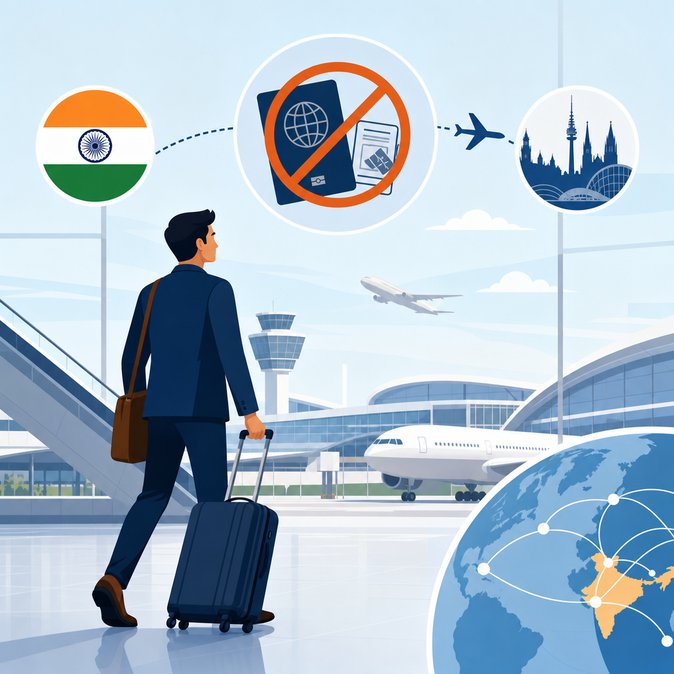
With the Schengen Entry/Exit System (EES) now operational at all external borders, Indian tourists, students and business travellers will notice the end of passport-stamping and the start of biometric enrolment every time they enter or leave Europe. The digital database—live since 10 April 2026—records facial images, fingerprints and travel document data for every non-EU visitor and automatically checks compliance with the 90/180-day stay rule. Airports in Frankfurt, Paris, Madrid and Athens have re-routed passenger flows to accommodate first-time EES registrations, adding self-service kiosks and deploying roving staff to avoid summer congestion. Travellers who registered biometrics on an earlier trip should move faster on subsequent visits, but EU transport ministries still advise arriving at least 30 minutes earlier than pre-EES norms. For Indian mobility managers the biggest impact lies in audit-ready travel records. The EES database feeds directly into carrier API systems, meaning overstays can trigger entry bans and jeopardise future Schengen visa renewals. Companies sponsoring short-term assignees must therefore tighten trip-tracking tools and educate travellers that weekend breaks in Switzerland or Spain now count automatically towards their 90-day allowance. EES is also a precursor to ETIAS, the electronic travel authorisation that will become mandatory for visa-exempt nationalities later in 2026. While Indians still require a Schengen visa, ETIAS will affect employees holding second passports from countries such as the US or Canada. Firms with complex citizenship portfolios should begin mapping which staff will require ETIAS clearance for dual-passport travel.
Source: The Traveler