Belgium woke up on 12 June 2026 to a fundamentally different migration landscape as the European Union’s long-awaited Pact on Migration and Asylum became fully applicable. The new regulatory package, agreed in 2024 after years of political deadlock, rewrites every stage of the migrant journey—from the moment a person is intercepted at an external border to the final decision on protection or return. For Belgium, which processes more than 30 000 asylum requests a year and hosts the EU’s institutional seat in Brussels, the stakes are high.
In this shifting policy environment, travellers and employers may find the new procedures daunting. VisaHQ’s digital platform (https://www.visahq.com/belgium/) offers step-by-step support for Belgian visas, work permits and Schengen documentation, ensuring applications comply with the Pact’s stricter timelines and the Entry-Exit System’s data requirements—saving applicants time and reducing costly errors.
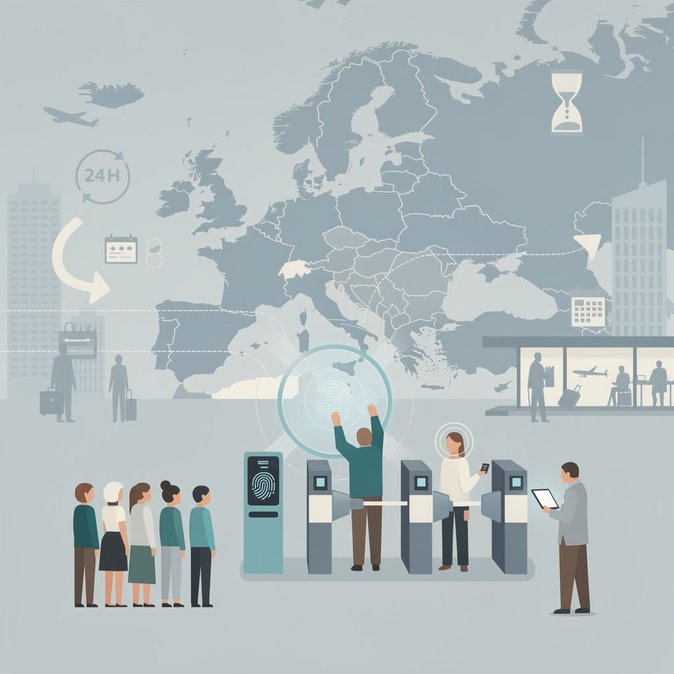
Under the Pact, Belgian police and Immigration Office officials must now register all irregular arrivals within 24 hours in the upgraded Eurodac biometric database, conduct mandatory security and vulnerability checks, and decide—within a new seven-day “screening” window—whether an applicant moves into the regular asylum channel or a fast-track border procedure. The reform is expected to accelerate decisions but also demands major investments in IT interfaces, detention capacity near entry points, and specialised staff training. The Interior Ministry confirmed that six new screening facilities at Brussels Airport, the Port of Antwerp and three land-border crossings went live at midnight. The Pact also introduces a permanent solidarity mechanism that can require Belgium either to accept relocation of asylum seekers from frontline states or to contribute financial and operational support. Belgian asylum minister Nicole de Moor told MPs that the country “will likely be a net contributor in some years and a beneficiary in others,” and called for the private sector to prepare for quicker labour-market access: recognised refugees can now work after six months instead of nine. Business-travel managers have welcomed clearer rules on short-stay visa waivers for bona-fide corporate travellers transiting the Schengen Area, but warn that tighter external-border checks could lengthen queues at Brussels Airport during peak hours. Carriers operating at the airport are adjusting check-in cut-off times and advising non-EU passengers to complete pre-travel registration on the EU Entry-Exit System (EES), which is now compulsory. In the medium term, mobility specialists expect the Pact to reduce so-called “secondary movements” within the bloc, stabilise Belgium’s overstretched reception network, and provide multinational companies with a more predictable framework for intracompany transfers. Yet NGOs caution that faster procedures must not come at the expense of due-process guarantees, and they will monitor Belgium’s newly created independent monitoring mechanism closely.
In this shifting policy environment, travellers and employers may find the new procedures daunting. VisaHQ’s digital platform (https://www.visahq.com/belgium/) offers step-by-step support for Belgian visas, work permits and Schengen documentation, ensuring applications comply with the Pact’s stricter timelines and the Entry-Exit System’s data requirements—saving applicants time and reducing costly errors.
Under the Pact, Belgian police and Immigration Office officials must now register all irregular arrivals within 24 hours in the upgraded Eurodac biometric database, conduct mandatory security and vulnerability checks, and decide—within a new seven-day “screening” window—whether an applicant moves into the regular asylum channel or a fast-track border procedure. The reform is expected to accelerate decisions but also demands major investments in IT interfaces, detention capacity near entry points, and specialised staff training. The Interior Ministry confirmed that six new screening facilities at Brussels Airport, the Port of Antwerp and three land-border crossings went live at midnight. The Pact also introduces a permanent solidarity mechanism that can require Belgium either to accept relocation of asylum seekers from frontline states or to contribute financial and operational support. Belgian asylum minister Nicole de Moor told MPs that the country “will likely be a net contributor in some years and a beneficiary in others,” and called for the private sector to prepare for quicker labour-market access: recognised refugees can now work after six months instead of nine. Business-travel managers have welcomed clearer rules on short-stay visa waivers for bona-fide corporate travellers transiting the Schengen Area, but warn that tighter external-border checks could lengthen queues at Brussels Airport during peak hours. Carriers operating at the airport are adjusting check-in cut-off times and advising non-EU passengers to complete pre-travel registration on the EU Entry-Exit System (EES), which is now compulsory. In the medium term, mobility specialists expect the Pact to reduce so-called “secondary movements” within the bloc, stabilise Belgium’s overstretched reception network, and provide multinational companies with a more predictable framework for intracompany transfers. Yet NGOs caution that faster procedures must not come at the expense of due-process guarantees, and they will monitor Belgium’s newly created independent monitoring mechanism closely.