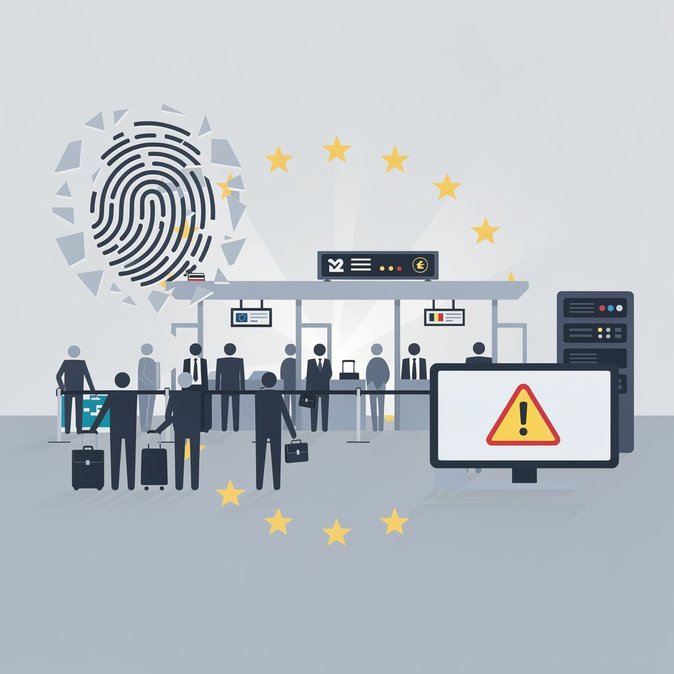
Barely hours after the Migration and Asylum Pact became operational, Belgian officials were scrambling to manage a Europe-wide outage of Eurodac—the central biometric database that sits at the heart of the new system. According to a Reuters report, the Dutch Immigration Service first flagged the malfunction during an overnight software update; by mid-morning on 12 June, several member states, including Belgium, were unable to upload fingerprints and facial images.
For travellers caught in the cross-currents of such system outages, VisaHQ’s online platform (https://www.visahq.com/belgium/) can step in with up-to-date visa guidance, document checklists and expedited processing for Belgium, helping both individuals and corporate mobility teams keep trips on track even when border technology falters.
The Interior Ministry confirmed that initial screening at Brussels Airport and Zeebrugge port switched to a “degraded, manual mode,” with data to be back-entered once the system stabilises. Eurodac version 3 expands data fields and lowers the age threshold for minors, making it indispensable for the seven-day screening timetable. Without real-time access, border officers must issue paper receipts and store biometric templates locally—raising chain-of-custody concerns and slowing down passenger flows. The Federal Police reported queues of up to 45 minutes at the airport’s non-EU arrivals zone, though priority lanes for connecting business travellers kept most Schengen-area transfers on time. An EU spokesperson downplayed the glitch as “first-day teething problems,” noting that servers were being rebooted and patches deployed. Yet Belgian data-protection watchdog APD has already asked for assurances that temporary work-arounds comply with GDPR and the new Fundamental Rights Monitoring Mechanism. Carriers fear that any prolonged instability could force them to delay flights for passengers pulled into secondary screening. Corporate mobility managers should monitor airline alerts and build extra buffer time into itineraries for non-EU assignees arriving in Belgium this week. Employers sponsoring Highly Qualified Worker permits are not directly affected, but delayed Eurodac hits the overall asylum workflow, potentially prolonging occupancy at reception centres near business districts and straining local housing markets. The incident is a stark reminder that the success of regulatory reform hinges on resilient tech infrastructure. Belgium’s Immigration Office says it will review contingency plans with EU-LISA, the agency running Eurodac, before the peak summer travel season.
For travellers caught in the cross-currents of such system outages, VisaHQ’s online platform (https://www.visahq.com/belgium/) can step in with up-to-date visa guidance, document checklists and expedited processing for Belgium, helping both individuals and corporate mobility teams keep trips on track even when border technology falters.
The Interior Ministry confirmed that initial screening at Brussels Airport and Zeebrugge port switched to a “degraded, manual mode,” with data to be back-entered once the system stabilises. Eurodac version 3 expands data fields and lowers the age threshold for minors, making it indispensable for the seven-day screening timetable. Without real-time access, border officers must issue paper receipts and store biometric templates locally—raising chain-of-custody concerns and slowing down passenger flows. The Federal Police reported queues of up to 45 minutes at the airport’s non-EU arrivals zone, though priority lanes for connecting business travellers kept most Schengen-area transfers on time. An EU spokesperson downplayed the glitch as “first-day teething problems,” noting that servers were being rebooted and patches deployed. Yet Belgian data-protection watchdog APD has already asked for assurances that temporary work-arounds comply with GDPR and the new Fundamental Rights Monitoring Mechanism. Carriers fear that any prolonged instability could force them to delay flights for passengers pulled into secondary screening. Corporate mobility managers should monitor airline alerts and build extra buffer time into itineraries for non-EU assignees arriving in Belgium this week. Employers sponsoring Highly Qualified Worker permits are not directly affected, but delayed Eurodac hits the overall asylum workflow, potentially prolonging occupancy at reception centres near business districts and straining local housing markets. The incident is a stark reminder that the success of regulatory reform hinges on resilient tech infrastructure. Belgium’s Immigration Office says it will review contingency plans with EU-LISA, the agency running Eurodac, before the peak summer travel season.