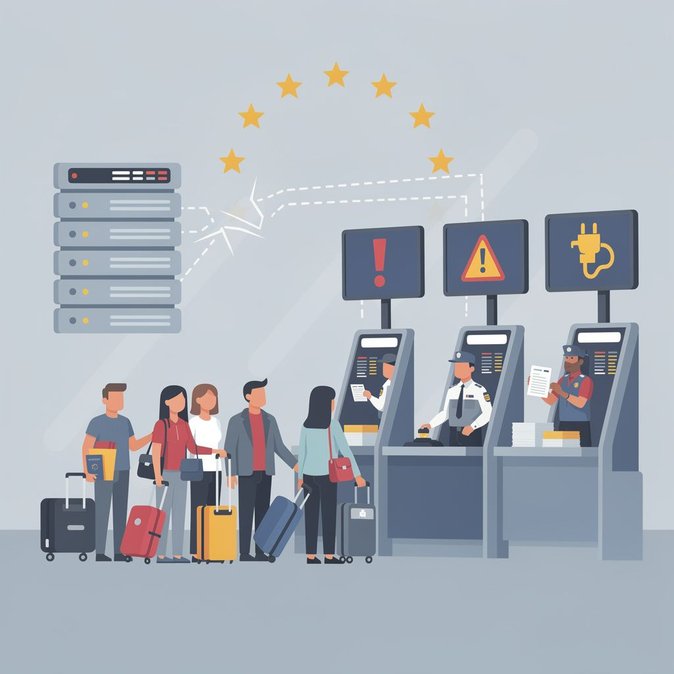
From 12 June, every non-EU national arriving in Cyprus by air or sea is subject to the EU’s new mandatory screening procedure, which must be completed within seven days of arrival—or three if their biometric data are already in Eurodac. The rules apply at the external border, meaning Larnaca, Pafos and Limassol port officers now collect fingerprints, a facial image and security-risk information for each traveller who does not hold EU citizenship. Business travellers on short-term visas should experience only minor changes: the process is expected to add 30-60 seconds at e-gates once new kiosks are live.
For corporate mobility teams seeking extra support, VisaHQ’s Cyprus portal (https://www.visahq.com/cyprus/) provides step-by-step guidance on the new entry rules, personalised document checklists and fast-track visa processing. Its specialists monitor EU border-management updates in real time and can help travellers pre-submit biometric data or secure work-permit endorsements before departure, reducing the risk of delays at Larnaca, Pafos and Limassol.
However, assignees from countries with an average EU asylum-recognition rate below 20 percent may be channelled into the Pact’s “border procedure” if they lack the right paperwork, potentially leading to on-site interviews before entry is granted. The Cypriot Civil Registry & Migration Department advises companies to double-check that employees carry proof of accommodation, return tickets and (where applicable) work-permit approvals. Failure to produce documents could trigger referral to secondary screening under the new rules. Airlines serving Cyprus have updated their Timatic profiles: passengers now receive automated prompts about biometric capture and the six-month limit before legal access to the Cypriot labour market under the recast Reception Directive. Travel-risk managers should refresh pre-trip checklists and warn staff that queues could lengthen at peak times until travellers and officers adjust to the new workflows. Longer term, authorities hope the smarter-border ecosystem—which also includes the Entry-Exit System launched in 2025 and ETIAS pre-travel authorisation due in 2027—will cut overstays and improve security while keeping Cyprus attractive to tourists and foreign investors.
For corporate mobility teams seeking extra support, VisaHQ’s Cyprus portal (https://www.visahq.com/cyprus/) provides step-by-step guidance on the new entry rules, personalised document checklists and fast-track visa processing. Its specialists monitor EU border-management updates in real time and can help travellers pre-submit biometric data or secure work-permit endorsements before departure, reducing the risk of delays at Larnaca, Pafos and Limassol.
However, assignees from countries with an average EU asylum-recognition rate below 20 percent may be channelled into the Pact’s “border procedure” if they lack the right paperwork, potentially leading to on-site interviews before entry is granted. The Cypriot Civil Registry & Migration Department advises companies to double-check that employees carry proof of accommodation, return tickets and (where applicable) work-permit approvals. Failure to produce documents could trigger referral to secondary screening under the new rules. Airlines serving Cyprus have updated their Timatic profiles: passengers now receive automated prompts about biometric capture and the six-month limit before legal access to the Cypriot labour market under the recast Reception Directive. Travel-risk managers should refresh pre-trip checklists and warn staff that queues could lengthen at peak times until travellers and officers adjust to the new workflows. Longer term, authorities hope the smarter-border ecosystem—which also includes the Entry-Exit System launched in 2025 and ETIAS pre-travel authorisation due in 2027—will cut overstays and improve security while keeping Cyprus attractive to tourists and foreign investors.