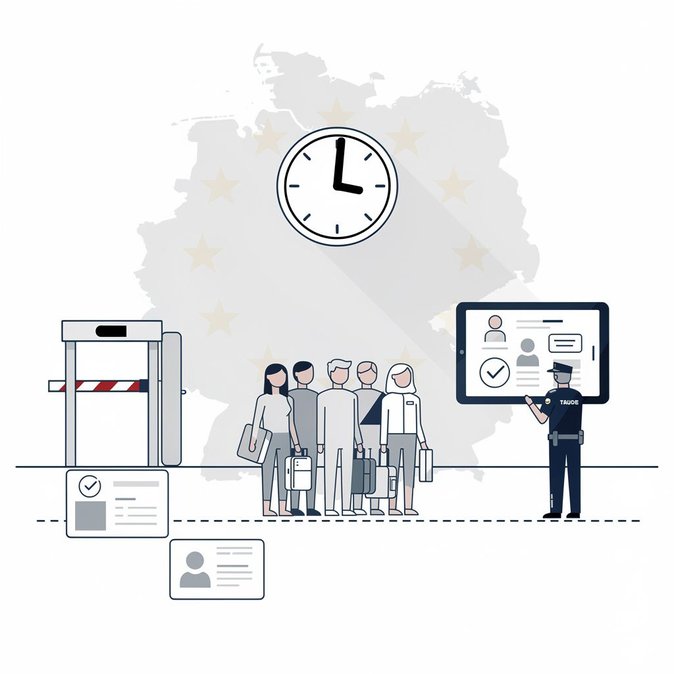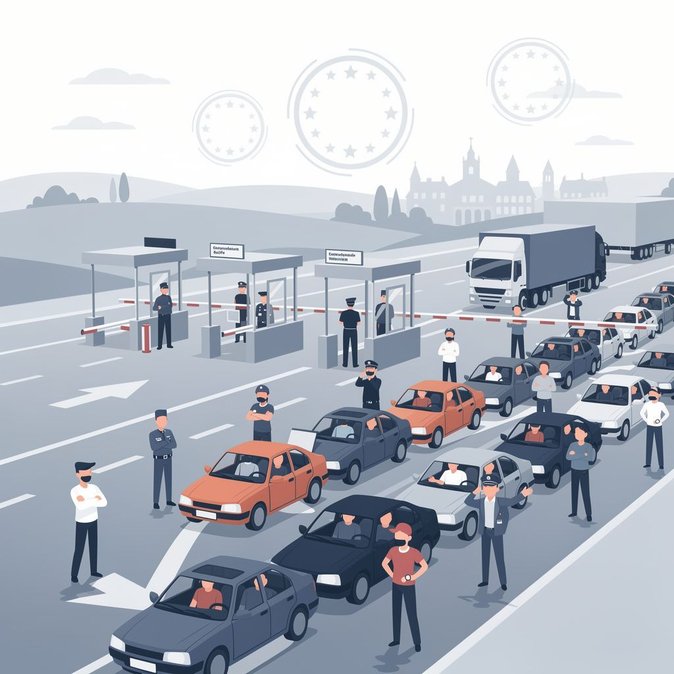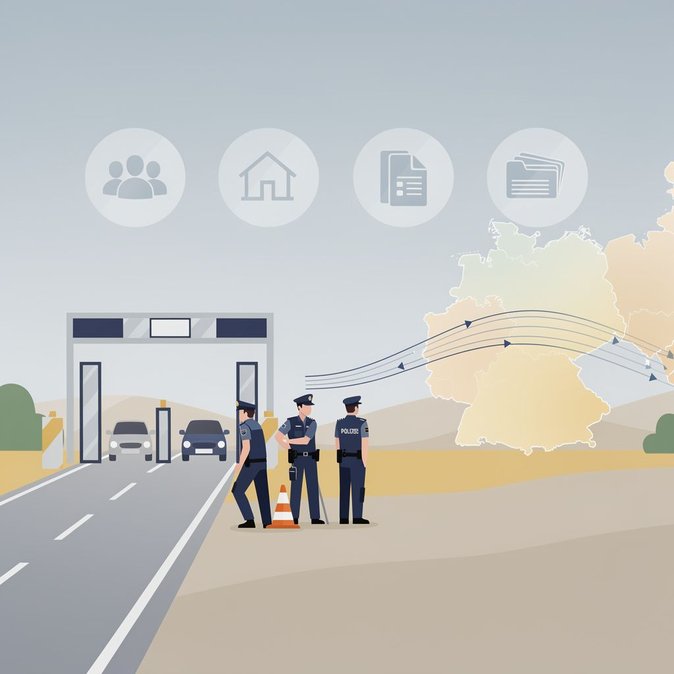
Speaking at a ceremony marking 75 years of the Federal Police in Potsdam, Interior Minister Alexander Dobrindt acknowledged that Germany’s year-old re-introduction of Schengen border controls has placed “extreme operational strain” on officers. The minister praised the force’s resilience but reiterated that the controls “cannot become permanent”. Germany first re-introduced fixed checks at all land borders in September 2024 citing migrant smuggling; since then they have been renewed three times, most recently until 15 September 2026. The EU Commission has repeatedly warned Berlin that the measures are disproportionate now that the GEAS pact is live.
For travelers and companies trying to keep up with these shifting requirements, VisaHQ can provide invaluable assistance: the platform’s Germany page (https://www.visahq.com/germany/) tracks the latest visa, residence and transit rules, offering step-by-step support so commuters, employers and logistics operators can ensure their documentation is always in order even while policies remain in flux.
Dobrindt hinted the government could sign bilateral ‘return centre’ agreements with neighbouring countries by year-end, allowing the controls to be phased out. For cross-border commuters – roughly 110,000 people who live in Poland, Czechia, France or the Benelux and work in Germany – the comments are the clearest sign yet that relief may come before the Christmas peak. Logistics associations, however, warn that staffing shortfalls and Eurodac teething problems could force another extension. Companies should continue to provide employees with proof of employment and consider flexible shift times during the summer peak, but HR leaders may cautiously plan for a return to passport-free crossings in Q4 2026.
For travelers and companies trying to keep up with these shifting requirements, VisaHQ can provide invaluable assistance: the platform’s Germany page (https://www.visahq.com/germany/) tracks the latest visa, residence and transit rules, offering step-by-step support so commuters, employers and logistics operators can ensure their documentation is always in order even while policies remain in flux.
Dobrindt hinted the government could sign bilateral ‘return centre’ agreements with neighbouring countries by year-end, allowing the controls to be phased out. For cross-border commuters – roughly 110,000 people who live in Poland, Czechia, France or the Benelux and work in Germany – the comments are the clearest sign yet that relief may come before the Christmas peak. Logistics associations, however, warn that staffing shortfalls and Eurodac teething problems could force another extension. Companies should continue to provide employees with proof of employment and consider flexible shift times during the summer peak, but HR leaders may cautiously plan for a return to passport-free crossings in Q4 2026.