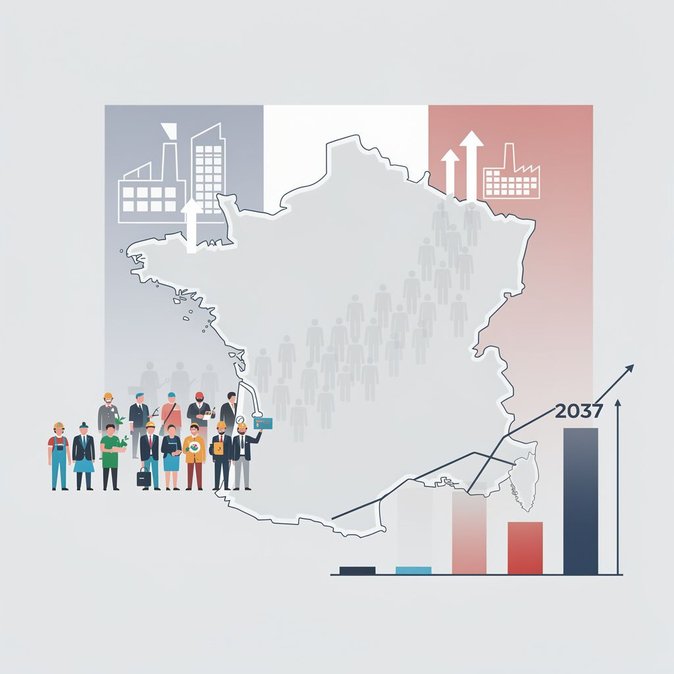
A Le Monde analysis published on the evening of 11 June unpacks fresh INSEE forecasts showing France’s population could start shrinking from 2037 unless net immigration remains near 150 000 people a year. The piece argues that, with fertility at 1.68 births per woman and the baby-boomer cohort retiring, immigration is becoming an economic—if politically divisive—necessity. Business federations quoted in the article say labour shortages in construction, hospitality and advanced manufacturing already threaten re-industrialisation plans. Public-investment bank Bpifrance warns that without migrant workers technician vacancies will stifle SME growth. The debate arrives as presidential hopefuls sharpen anti-immigration messages, but the timing also coincides with the EU Pact’s entry into force, showing the tension between economic need and tighter asylum procedures. For mobility professionals the takeaway is clear: France’s long-term competitiveness will hinge on attracting qualified foreign talent even while public discourse grows more restrictive. Companies should therefore monitor upcoming decrees promised by Labour Minister Jean-Pierre Farandou that aim to simplify work-authorisation for shortage occupations. Le Monde notes that Germany’s experience—using migration to offset demographic decline since the 1970s—serves as a cautionary benchmark. Whether France can adopt a similarly pragmatic stance will be a central theme as the 2027 presidential campaign kicks off.
Source: Le Monde