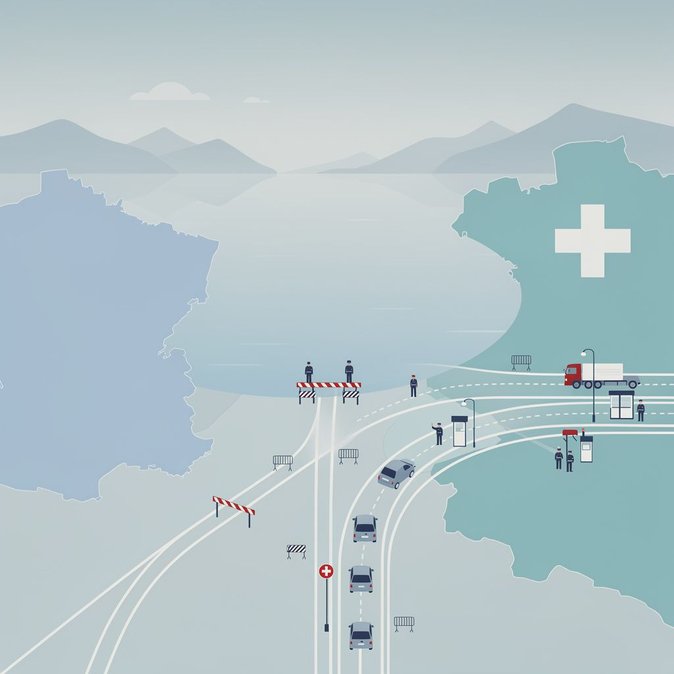
The canton of Geneva shut most of its land crossings with neighbouring France on 12 June, erecting barriers and wire fencing in preparation for the 15-17 June G7 summit in Evian-les-Bains, just 30 km away. Only seven major posts remain open 24/7, all operating with reinforced identity and vehicle checks by Swiss customs and police. The feeder A1 motorway at Meyrin-Bardonnex is partially closed, forcing freight to reroute via French customs at La Ferrière-sous-Jougne—150 km north-east—adding hours to just-in-time supply chains. Cross-border commuters—some 100,000 people travel daily between the Geneva region and France—have been urged to work from home.
In this context, VisaHQ can help travelers and mobility managers stay ahead of sudden border rule changes by confirming document validity, arranging any required visas or travel authorizations, and providing live updates on the status of individual crossings. Their France country page (https://www.visahq.com/france/) offers a quick starting point for checking requirements and ordering expedited services.
Public-transport timetables for the Léman Express have been adjusted, with trains required to slow when crossing into France to accommodate spot checks by joint patrols. Swiss authorities say the move is temporary and proportional, citing the 2003 G8 summit in Evian when violent protests erupted. The French Interior Ministry has simultaneously re-introduced internal Schengen controls until 19 June under Article 25 of the Schengen Borders Code. Hotels in nearby Annemasse report cancellation rates of up to 20 % by business travellers, while logistics firms warn that medical-device exports critical to French hospitals may face delivery delays. Mobility managers should advise travellers to carry passports rather than rely on national ID cards and to build significant buffers into ground-transfer schedules.
In this context, VisaHQ can help travelers and mobility managers stay ahead of sudden border rule changes by confirming document validity, arranging any required visas or travel authorizations, and providing live updates on the status of individual crossings. Their France country page (https://www.visahq.com/france/) offers a quick starting point for checking requirements and ordering expedited services.
Public-transport timetables for the Léman Express have been adjusted, with trains required to slow when crossing into France to accommodate spot checks by joint patrols. Swiss authorities say the move is temporary and proportional, citing the 2003 G8 summit in Evian when violent protests erupted. The French Interior Ministry has simultaneously re-introduced internal Schengen controls until 19 June under Article 25 of the Schengen Borders Code. Hotels in nearby Annemasse report cancellation rates of up to 20 % by business travellers, while logistics firms warn that medical-device exports critical to French hospitals may face delivery delays. Mobility managers should advise travellers to carry passports rather than rely on national ID cards and to build significant buffers into ground-transfer schedules.