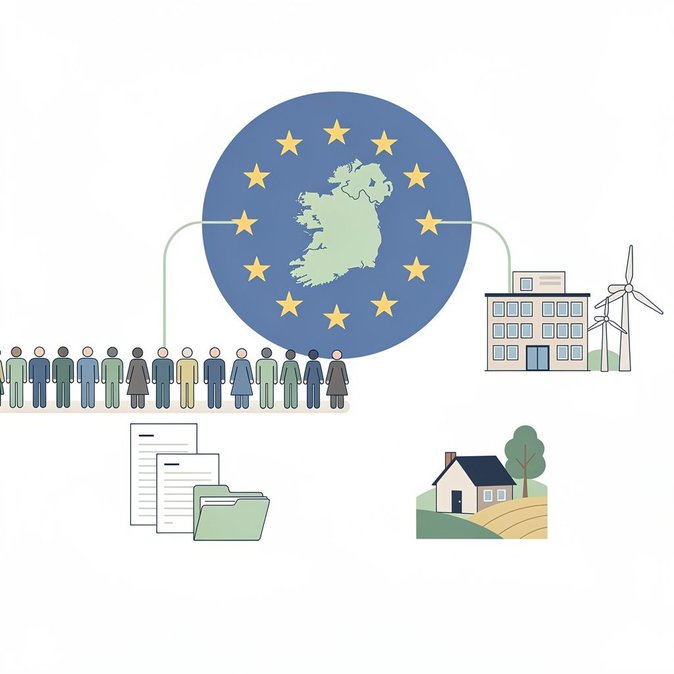
Speaking on Northern Sound radio, Cavan–Monaghan TD David Maxwell (Fine Gael) praised the Government’s decision to opt into the EU Migration and Asylum Pact, which also took effect on 12 June. Maxwell argued that the Pact, together with the International Protection Act 2026, will finally give Ireland the tools to clear a protection backlog that peaked above 30,000 files last year. Under the Pact, member states share biometric data, impose common inadmissibility criteria and can transfer applicants back to the first EU country where they were fingerprinted.
For individuals, employers and frequent travellers trying to understand how these evolving EU rules might affect their own visa or residence applications, VisaHQ offers an easy way to stay compliant. The Dublin-based platform (https://www.visahq.com/ireland/) tracks real-time documentation changes and provides step-by-step assistance for everything from Schengen visitor visas to longer-term work and study permits, removing guesswork from an already complex process.
Maxwell believes these measures will discourage “asylum-shopping” and reduce pressure on accommodation providers across rural constituencies such as his own. He contrasted Ireland’s alignment with what he described as the UK’s “piecemeal” post-Brexit system, noting that Northern Ireland continues to struggle with cross-border movements despite additional UK enforcement. Maxwell also welcomed the creation of the new €150 million European Border and Returns Fund, from which Ireland expects to draw €18 million for extra caseworkers and charter flights. Local manufacturers, he said, have complained that hotel-based accommodation for asylum seekers has driven up room rates for business travellers; faster decisions will free up beds and support tourism recovery. When asked about criticism from Sinn Féin, the TD insisted sovereignty was not at stake: “We pool rules where it makes sense so that genuine refugees get protection quickly and those abusing the system are dealt with humanely but firmly.” His comments indicate the political divide that is likely to shape the next phase of Ireland’s migration debate.
For individuals, employers and frequent travellers trying to understand how these evolving EU rules might affect their own visa or residence applications, VisaHQ offers an easy way to stay compliant. The Dublin-based platform (https://www.visahq.com/ireland/) tracks real-time documentation changes and provides step-by-step assistance for everything from Schengen visitor visas to longer-term work and study permits, removing guesswork from an already complex process.
Maxwell believes these measures will discourage “asylum-shopping” and reduce pressure on accommodation providers across rural constituencies such as his own. He contrasted Ireland’s alignment with what he described as the UK’s “piecemeal” post-Brexit system, noting that Northern Ireland continues to struggle with cross-border movements despite additional UK enforcement. Maxwell also welcomed the creation of the new €150 million European Border and Returns Fund, from which Ireland expects to draw €18 million for extra caseworkers and charter flights. Local manufacturers, he said, have complained that hotel-based accommodation for asylum seekers has driven up room rates for business travellers; faster decisions will free up beds and support tourism recovery. When asked about criticism from Sinn Féin, the TD insisted sovereignty was not at stake: “We pool rules where it makes sense so that genuine refugees get protection quickly and those abusing the system are dealt with humanely but firmly.” His comments indicate the political divide that is likely to shape the next phase of Ireland’s migration debate.