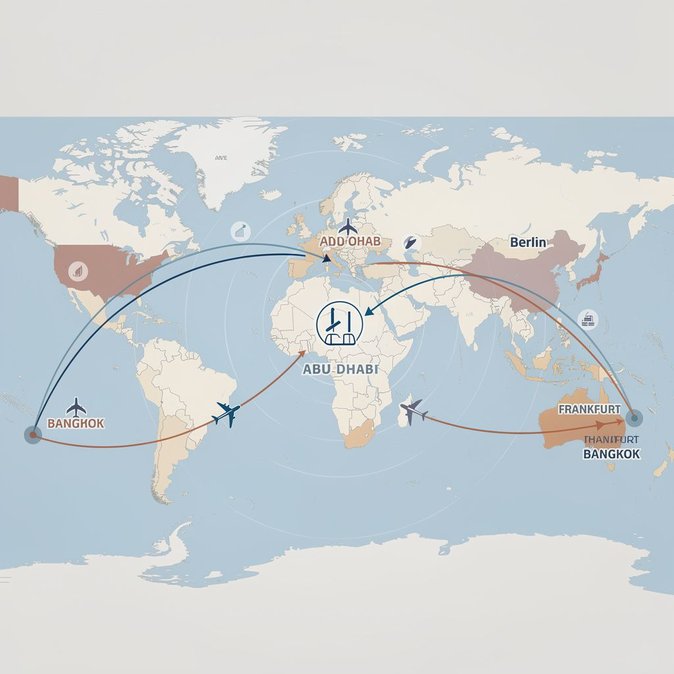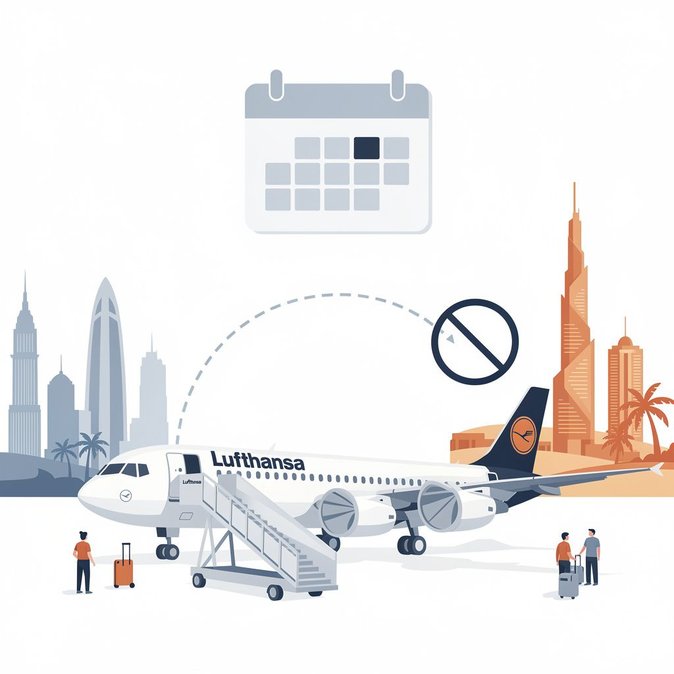
Corporate travel planners awoke on 13 June to find that Lufthansa Group brands—Lufthansa, SWISS and Eurowings—have removed Dubai (DXB/DWC) and Abu Dhabi (AUH) from their passenger schedules for the entire summer 2026 season. In an operational bulletin dated 12 June, the group cites “strategic fleet allocation” and “ongoing Middle-East network stabilisation” for the extension, pushing the Dubai pause to 13 September 2026 and Abu Dhabi to 24 October 2026. The move complicates routings between the Gulf’s second-largest corporate hub and Europe’s biggest inter-continental network, forcing travellers onto Emirates/Etihad codeshares, Gulf carriers via hubs such as Doha and Riyadh, or longer routings through Frankfurt with Middle-East feed provided by partner airlines. Travel-management companies estimate the decision affects roughly 6,000 weekly point-to-point business seats, with the chemical, automotive and professional-services sectors hardest hit. Key implications for mobility managers: (1) Existing PNRs on cancelled segments qualify for one free re-issue or full refund under the group’s Schedule-Change Policy; enter customer contacts in “SSR CTC” format to trigger auto-notices. (2) Staff with German residence permits transiting the Schengen area should watch connection times; some itineraries now involve non-Schengen transfers at Vienna, Zurich or Brussels. (3) Air-cargo capacity into the UAE is also reduced—logistics teams should secure allotments on Emirates SkyCargo or Etihad Cargo early, especially for temperature-controlled goods. Lufthansa says it continues to “monitor security, market demand and slot availability” and may reinstate UAE services earlier if conditions allow. For now, companies should re-benchmark travel-time targets, update risk assessments for alternative hubs and brief travellers on lounge-access and through-check changes when migrating to Gulf carriers.