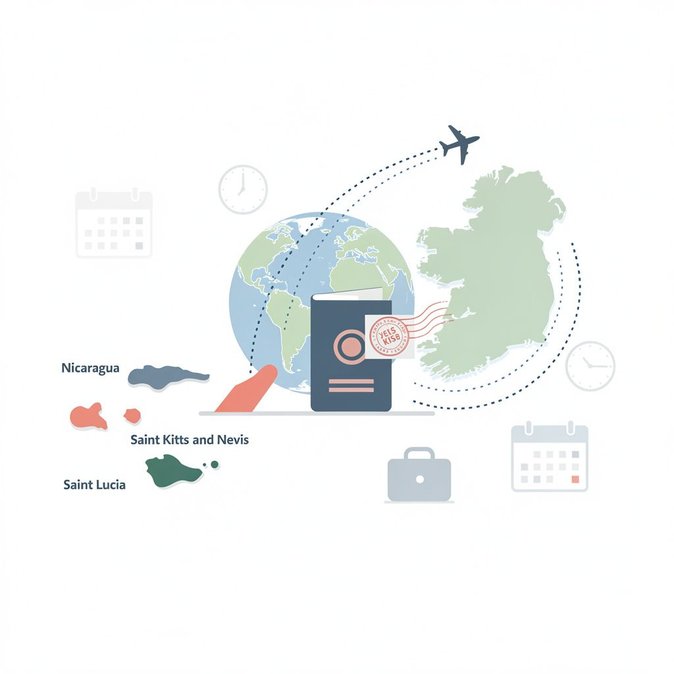
From 15 June 2026, citizens of Nicaragua, Saint Kitts and Nevis and Saint Lucia will need an Irish visa before travelling, ending their previous visa-waiver status. The change was announced on 12 June by Minister for Migration Colm Brophy, who cited migration-control priorities and alignment with Schengen visa policies. Transitional arrangements apply only to journeys booked before 15 June and undertaken by 14 July.
Travellers uncertain about the new procedures can turn to VisaHQ, whose Ireland portal (https://www.visahq.com/ireland/) offers step-by-step visa guidance, document checklists and submission services, helping individuals and corporate mobility teams avoid delays.
The new rule affects tourists, students and business visitors alike. Carriers operating Caribbean–Ireland routes must update system alerts or risk carrier-liability fines for transporting inadmissible passengers. Travel-management companies should revise visa matrices and alert Irish-based multinationals that regularly rotate staff from regional headquarters in the Caribbean. For corporate mobility teams, lead-time for Type C short-stay visas is currently three to four weeks; urgent travel may require rescheduling or routing via the UK under the Common Travel Area, though UK transit visas may also be triggered. Employers sponsoring long-term assignments should check whether employees need pre-clearance in addition to a visa under separate work-permit rules. Irish consular posts in Mexico City, Bridgetown and Kingstown will handle most applications, but the Department of Justice is deploying extra e-Visa processing staff to meet expected demand. Stakeholder webinars with Caribbean chambers of commerce are planned for next week. The Government says future visa-waiver reviews will balance security with tourism and trade, hinting further changes could follow a forthcoming risk assessment of other Latin American and Caribbean states.
Travellers uncertain about the new procedures can turn to VisaHQ, whose Ireland portal (https://www.visahq.com/ireland/) offers step-by-step visa guidance, document checklists and submission services, helping individuals and corporate mobility teams avoid delays.
The new rule affects tourists, students and business visitors alike. Carriers operating Caribbean–Ireland routes must update system alerts or risk carrier-liability fines for transporting inadmissible passengers. Travel-management companies should revise visa matrices and alert Irish-based multinationals that regularly rotate staff from regional headquarters in the Caribbean. For corporate mobility teams, lead-time for Type C short-stay visas is currently three to four weeks; urgent travel may require rescheduling or routing via the UK under the Common Travel Area, though UK transit visas may also be triggered. Employers sponsoring long-term assignments should check whether employees need pre-clearance in addition to a visa under separate work-permit rules. Irish consular posts in Mexico City, Bridgetown and Kingstown will handle most applications, but the Department of Justice is deploying extra e-Visa processing staff to meet expected demand. Stakeholder webinars with Caribbean chambers of commerce are planned for next week. The Government says future visa-waiver reviews will balance security with tourism and trade, hinting further changes could follow a forthcoming risk assessment of other Latin American and Caribbean states.